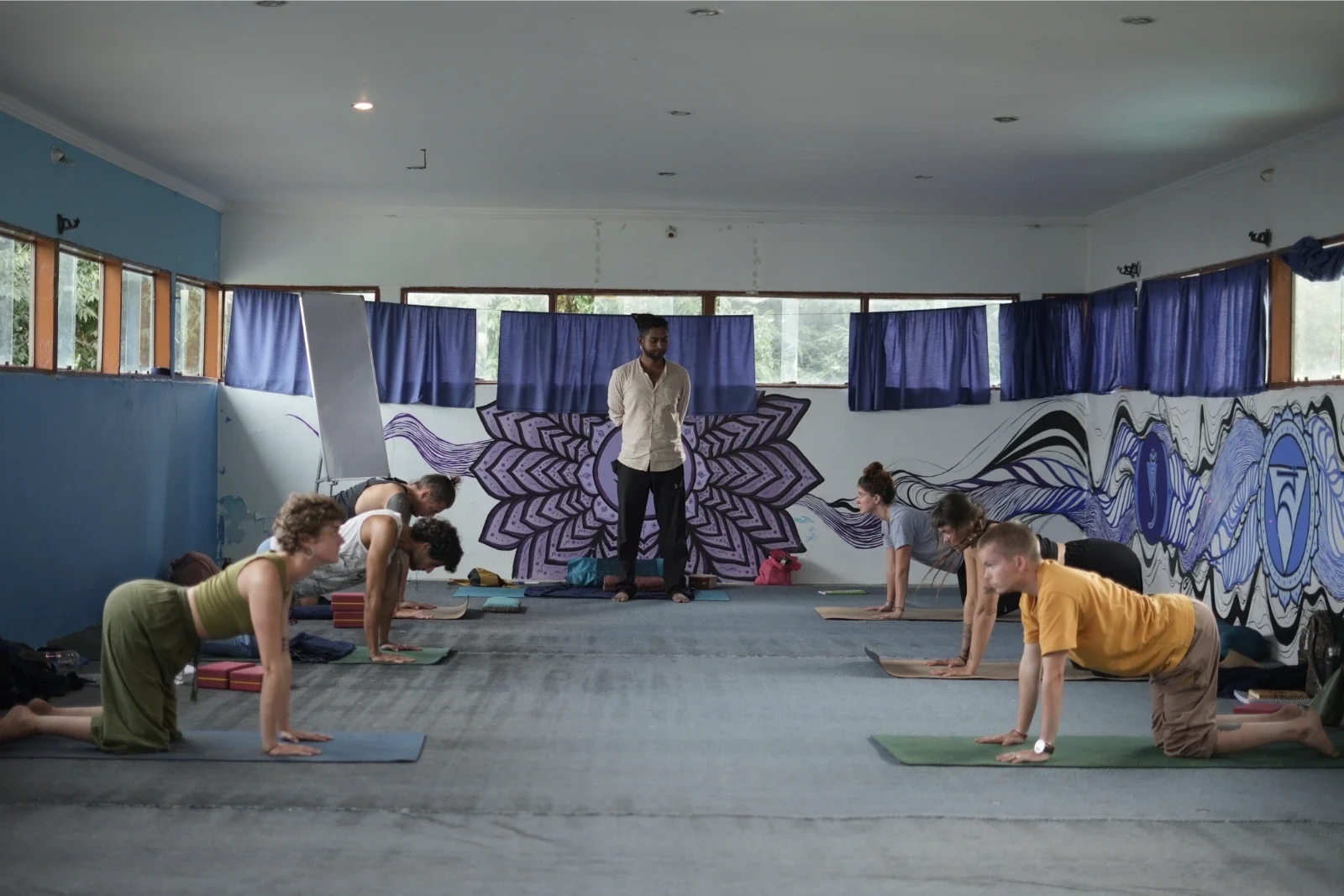
Yoga TTC
Yoga Teacher Training in Dharamshala
- Duration: 12, 23, or 28 Days
- Module: Residential with Ayurvedic Meals
- Level: All Levels - Beginner to Intermediate
- Certification: Yoga Alliance Certified
- Style: Hatha (Alignment-Based)
- Batch Size: Maximum 15 Participants
- Daily Hours: 10+ Hours of Instruction
Darshan built Prakruti in Rishikesh. Every course, every teacher, every decision about what to include and what to leave out - made there, over years of practice and refusal to compromise.
Dharamshala is not a new school. It is the same school, in a different place.
Dharamshala brings mountain air, Tibetan monastery culture and the particular quality of stillness that comes from altitude and forest. The course runs across 100-hour, 200-hour, and 300-hour formats. All three are Yoga Alliance certified.
Dharamshala is not a new school. It is the same school, in a different place.
Dharamshala brings mountain air, Tibetan monastery culture and the particular quality of stillness that comes from altitude and forest. The course runs across 100-hour, 200-hour, and 300-hour formats. All three are Yoga Alliance certified.
What You Will Study
The curriculum runs across seven disciplines the same across all three course levels, with depth increasing as the course length increases.
Hatha Yoga & Asana
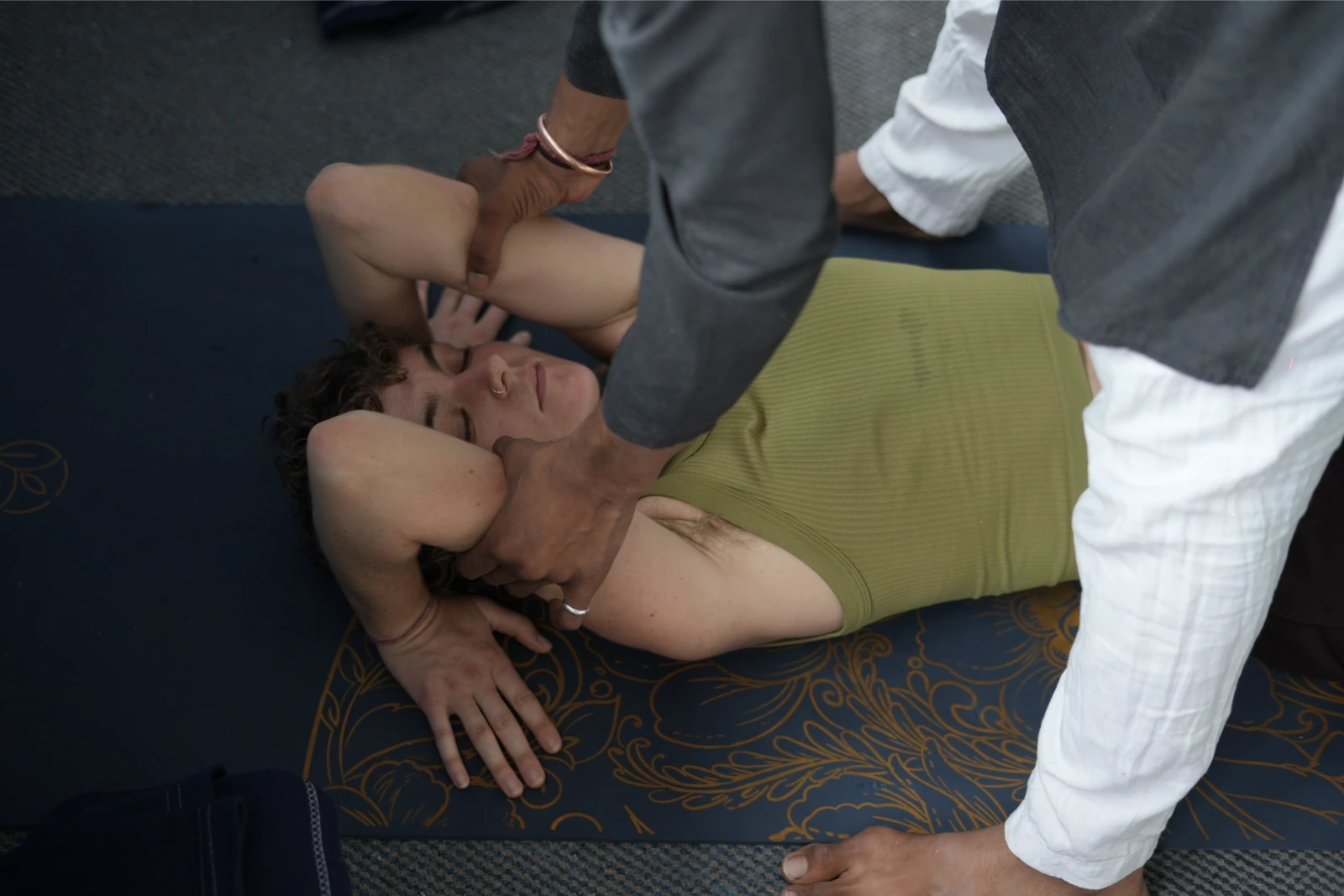
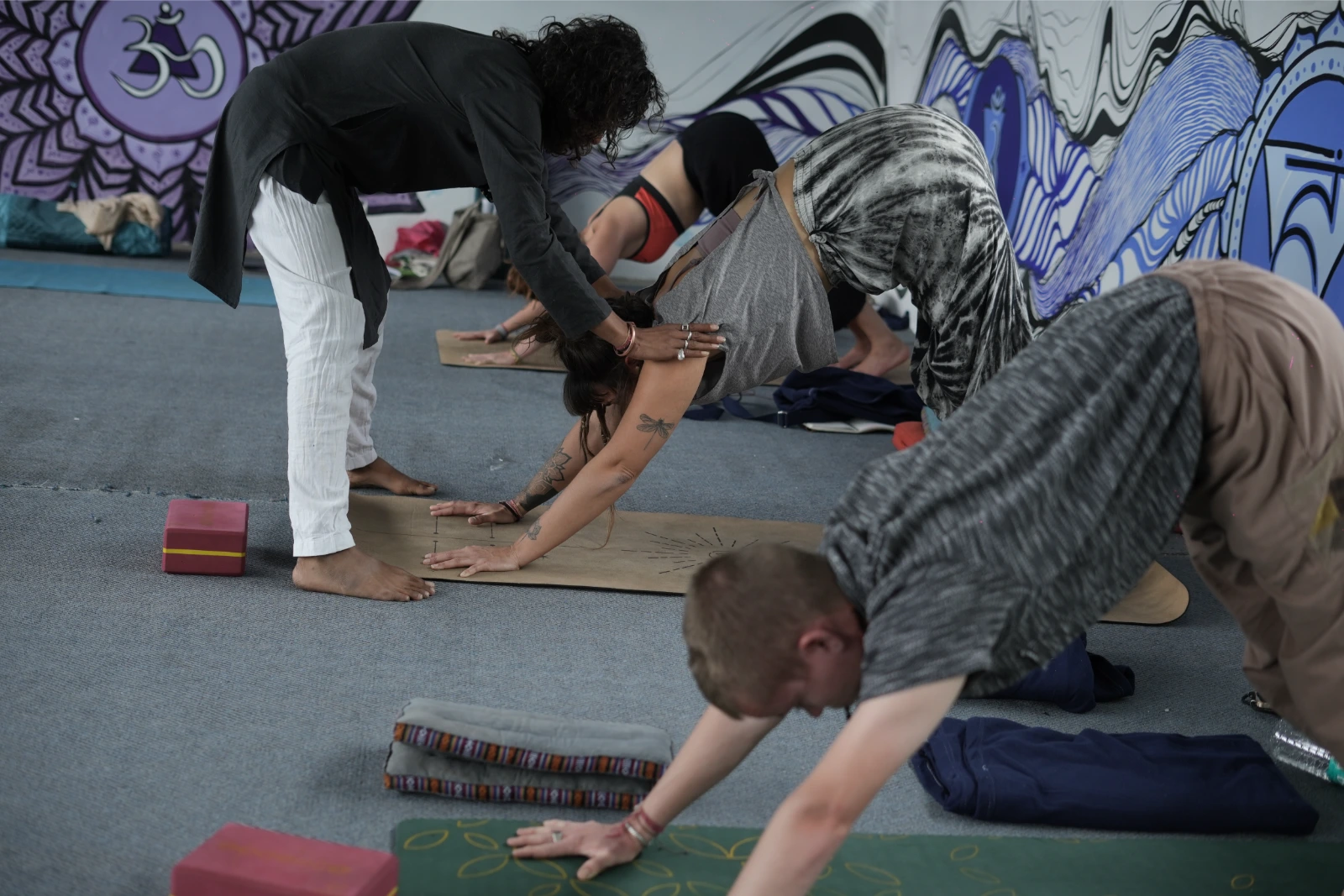
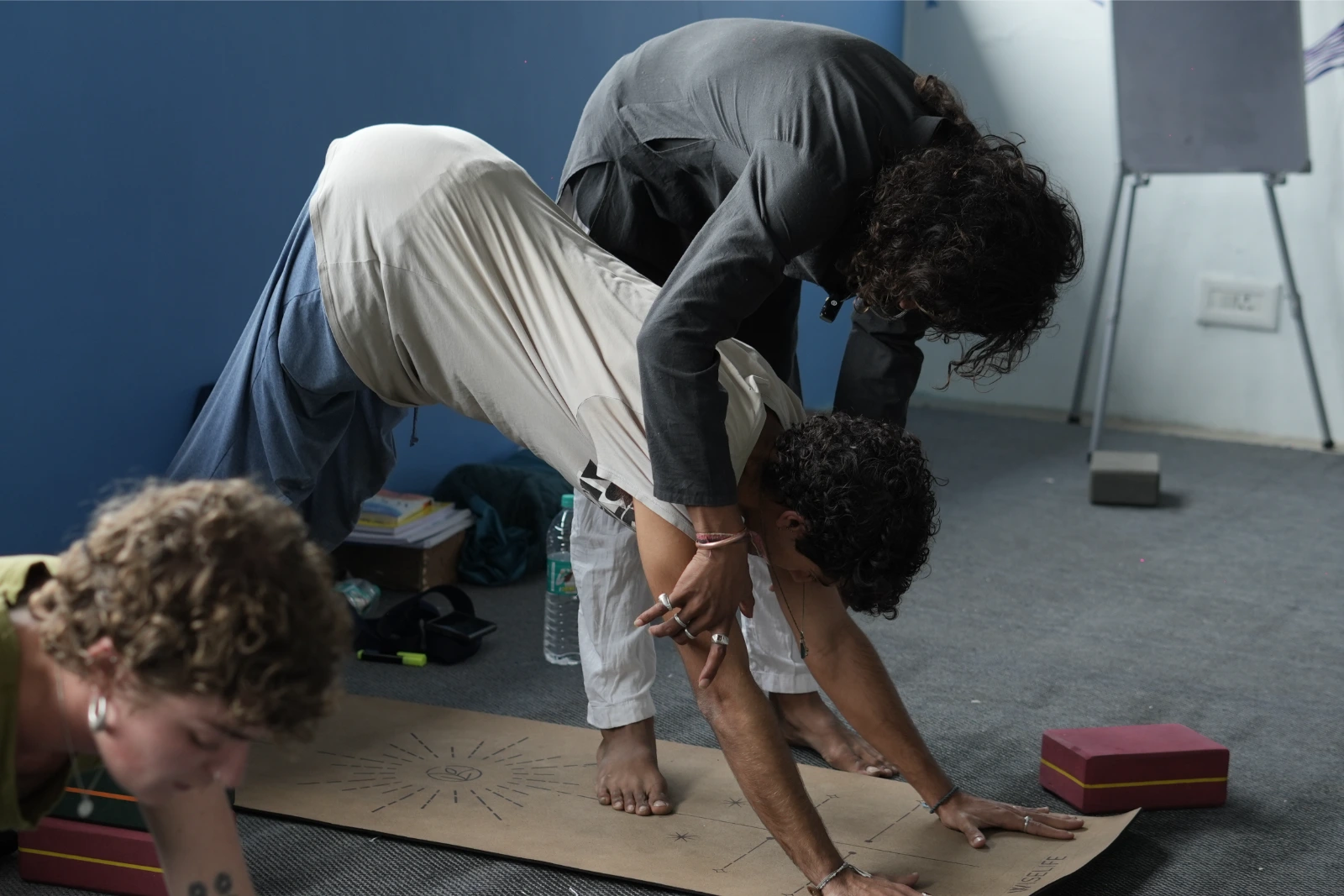
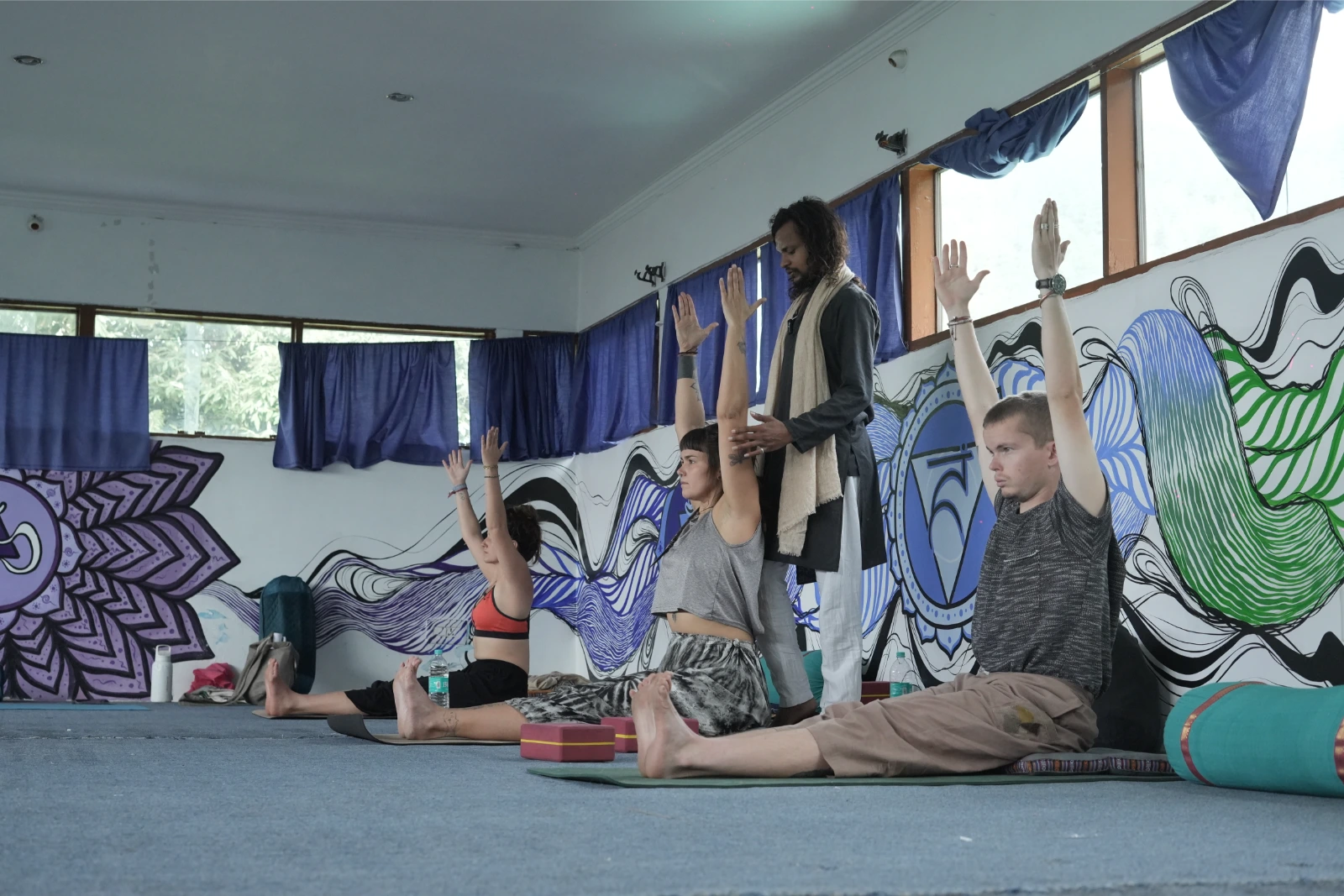
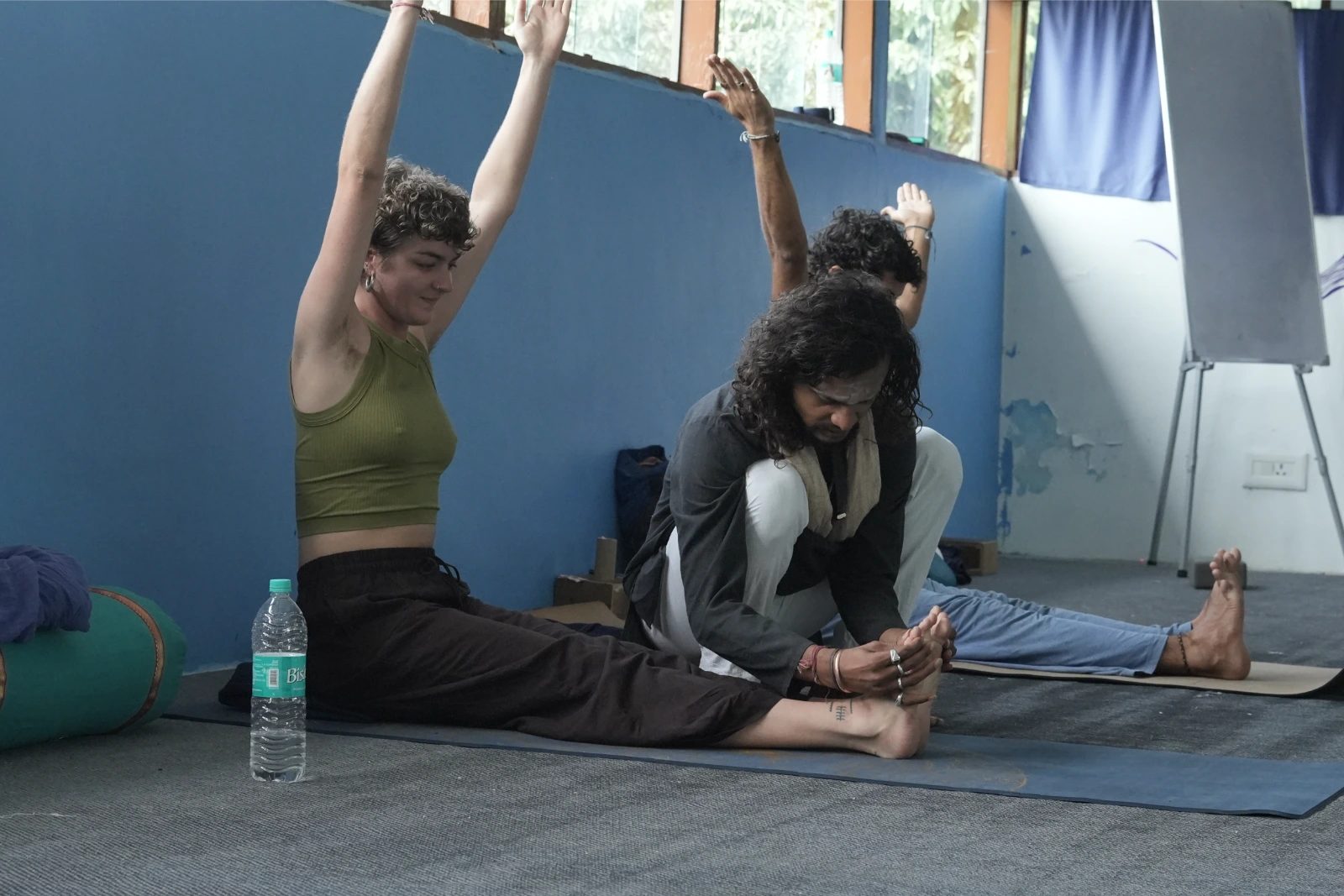
- Alignment-based instruction across hip opening, backbends, restoratives, arm balancing, forward folds, warrior series, inversions, and yogic jogging.
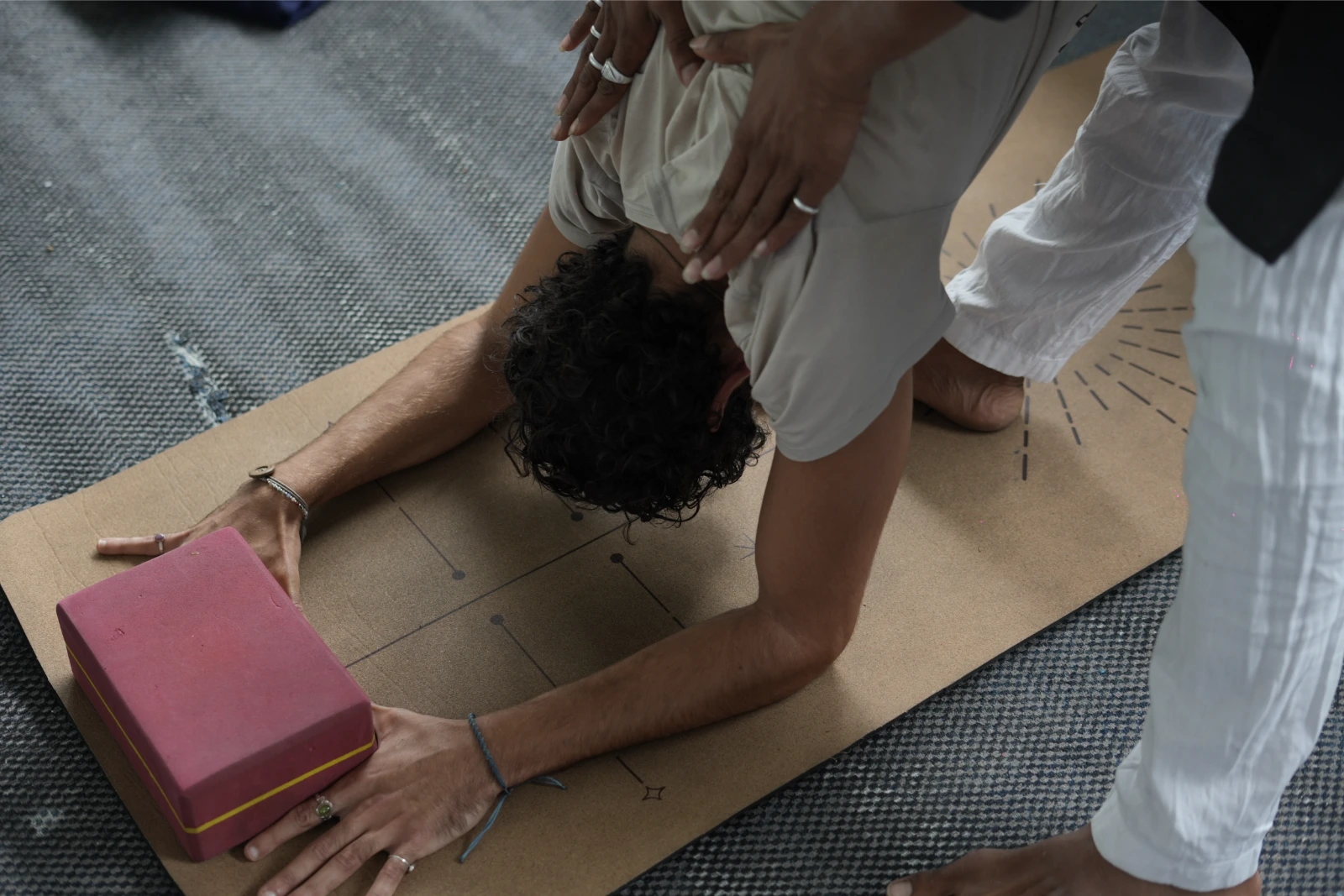
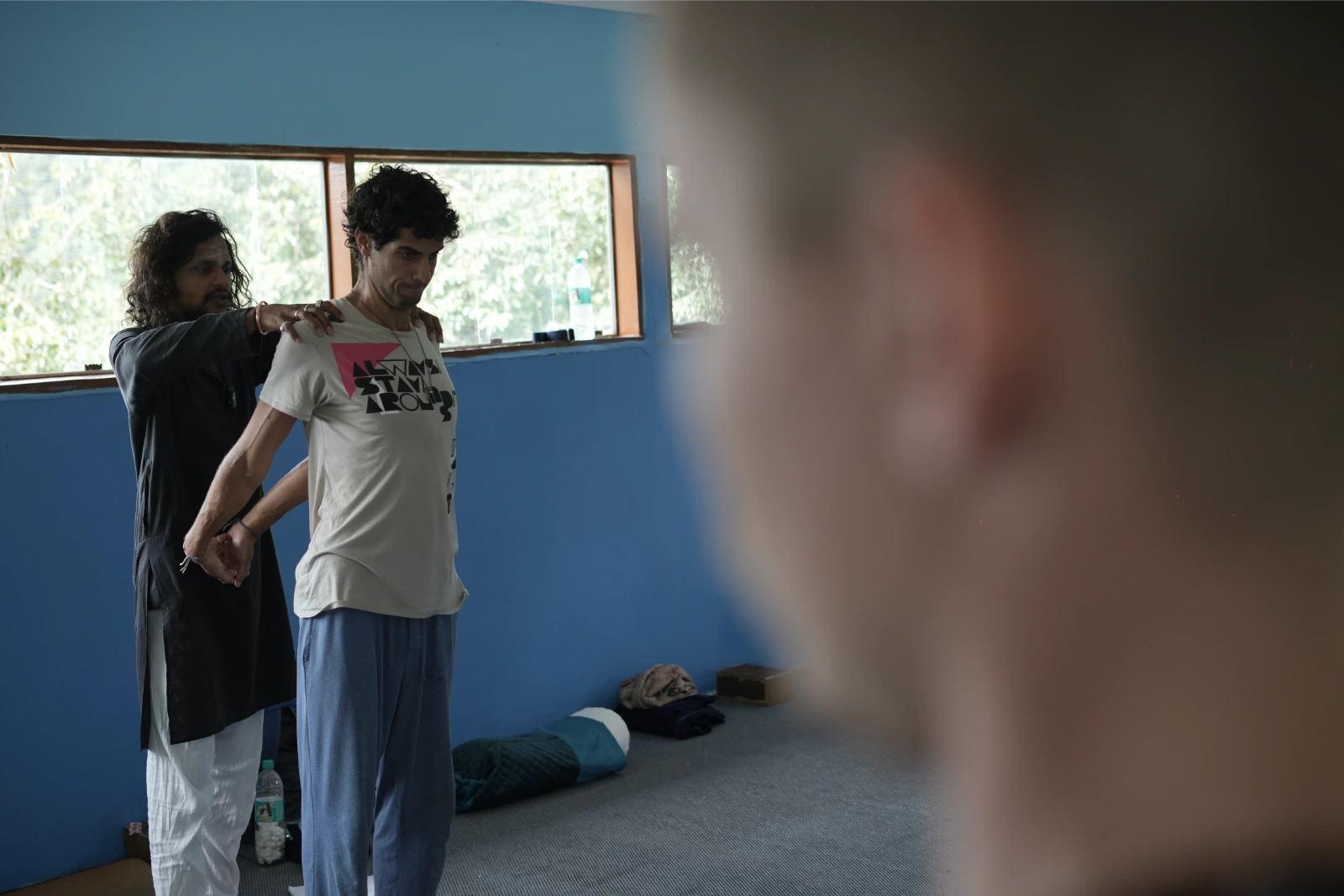
- Palms and feet as controllers of movement — the foundational Prakruti approach to how the body actually opens.
- Breathwork integrated into asana - movement and breath taught as one practice.
Pranayama
- Nadi Shodhana, Kapalbhati, Agnisar Kriya, Bhastrika, Surya and Chandra Bhedana, Bhramari, Ujjayi, Trataka.
- Mudras: Jnana, Chin, Dhyana, Yoni, Shambhavi, Bhairavi, Khechari.
- Bandhas: Mula, Uddiyana, Jalandhara, Maha Bandha — with understanding of the energy body (nadis, granthis, Kundalini).
Yoga Philosophy
- Yoga Sutras of Patanjali - Chapters 1 and 2 in depth, with Samkhya Darshana as the philosophical foundation.
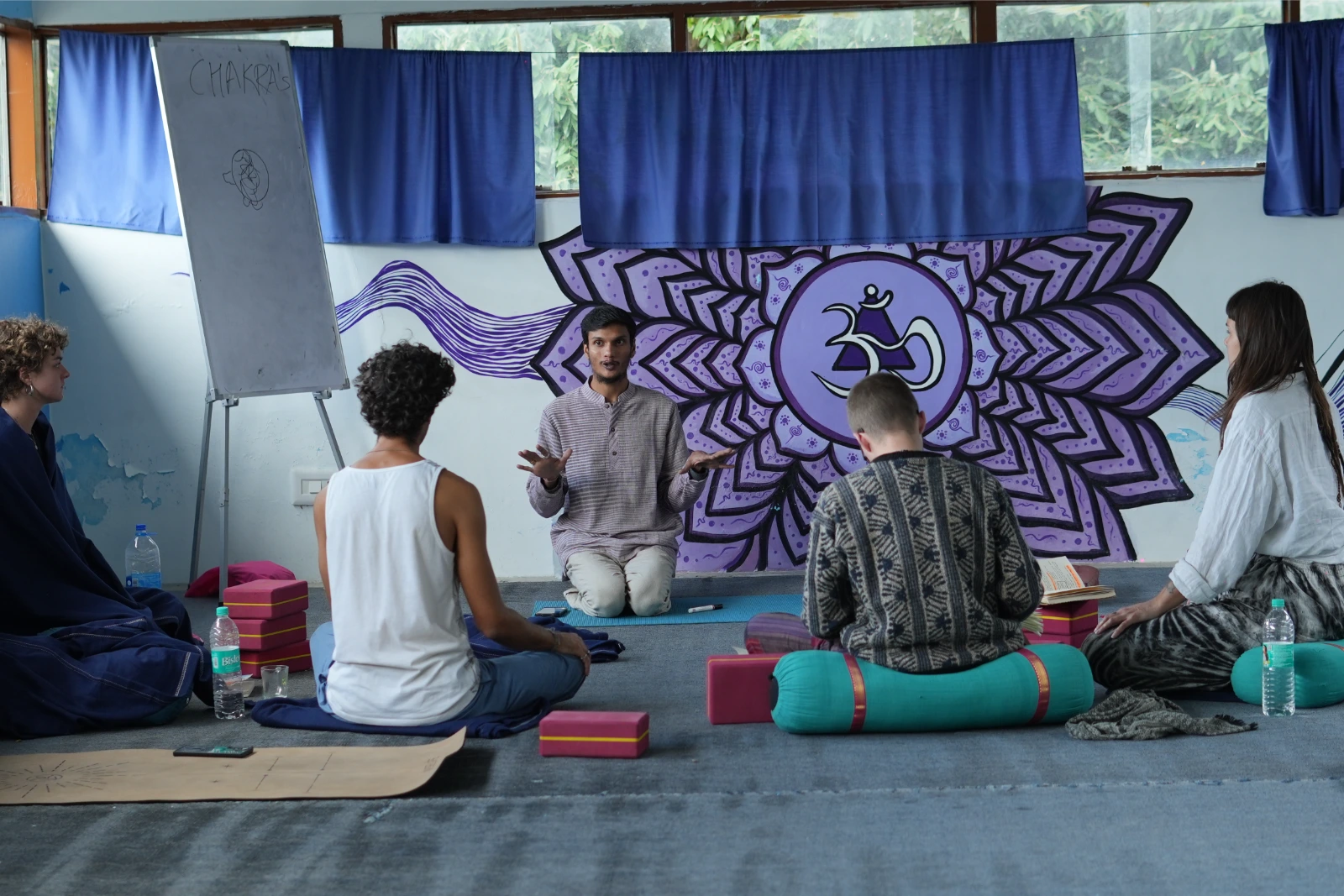
- Introduction to the Bhagavad Gita and Upanishads. Karma theory via Jain Darshana. Kundalini and chakras as functional maps.
- The eight limbs in practice. Dharana, Dhyana, Samadhi. History of yoga.
Meditation
- Aum meditation, mantra meditation, Trataka, Yoga Nidra, Ajapa, Japa, Antar Mouna.
- Techniques to improve concentration. Practicing silence. Nada Brahma meditation.
Yoga Anatomy
- Musculoskeletal system in depth for asana practice. Nervous, respiratory, circulatory, gastrointestinal, and endocrine systems.
- Nadis and chakras as anatomical maps. Guidelines to asana anatomy and alignment.
Ayurveda
- Prakriti and Vikriti - individual constitution and current imbalance. The three doshas and five elements.
- Triguna and dietary balance. Dinacharya - Ayurvedic daily routines. Herbal wisdom.
- Integrating Ayurveda with yoga practice for students.
Indian Classical Arts & Music
- Naada Yoga - the physiology of sound, mantra, and chanting. 20+ foundational mantras with meaning and context.
- Introduction to Indian classical music, Rasa theory, and aesthetics as a path of self-knowledge.
Beyond the Yoga Alliance Curriculum
Three areas are taught at Prakruti that do not exist in the standard Yoga Alliance curriculum:
- Sanskrit Semantics - the meaning behind the translations, and what is lost between Sanskrit and English. This is Darshan's particular area of original research.
- Naada Yoga - sound as a discipline, not decoration. Mantras taught with physiological context and correct pronunciation.
- Ayurveda as a diagnostic tool - not an introduction but a working knowledge of constitution and imbalance that changes how you teach.
- Excursions - river walks, temple visits and time in the natural environment around Rishikesh.
- Mentors in Ayurveda, Jyotisha, and Kalaripayattu
Take a journey with us in Dharamshala where you'll learn about yoga philosophy, perfect yoga poses, and become a confident teacher. You'll be ready to share the amazing benefits of yoga with others after completing our course.
Yoga Philosophy
- Daily mantra chanting, meditation, asana, yoga anatomy, and yoga philosophy
- Introduction to Yoga philosophy and yogic lifestyle
- Free Sound Healing / Reiki session
- Free Body Movement Workshop
- Eligible to register with Yoga Alliance upon completion
- One special session of the most appreciated Emotional Purification Treatment
- Receive 5-course books as PDFs in advance of the training
- Daily fresh and healthy organic vegetarian/vegan/gluten-free meals
- Yoga Alliance Certification
- Yoga is not just philosophy it’s a darshan which literally means lens of reality
- Bringing this knowledge in our day day life and look at reality with more depth and truth using the knowledge of traditional systems and referring Upanishads
- Himalayan tradition of yoga and introduction of different Indian philosophy
- History of yoga
- Yoga Sutras of Patanjali
- Types of yoga
- The Eight Limbs of Yoga: Yamas and Niyamas
- Philosophy behind Asanas
- Concentration (Dharana) and its power
- The Universe (Brahman)
- Kundalini
- Chakras
- Karma from Jain Darshsnas
- Yoga cleansing Neti (Jal, rubber)
- Kapalbhati (breath of fire)
- Trataka
- Agnisar Kriya
- Aspects of mind with yoga and Samkhya darshan
- Knowing the mind, ego, intellect and consciousness
- Samadhi
- Introducing Bhagavad Gita
Pranayama
- Definition of Prana (vital force energy)
- Introduction to pranayama
- Difference between Prana and breath
- Movement of prana in the body
- Nadis (energy channels)
- Chakras and pranayama, aim and objectives
- Benefits and contraindications
- Relation between breath, mind and emotion
- Emotional purification treatment
- Pranayama and aging
- Quality of breathing
- Life span and breathing
- Abdominal breathing
- Clavicular breathing
- Thoracic breathing
- Diaphragmatic breathing
- Yogic breathing
- Ujayi
- Bastrika
- Kapalbhati
- Nadi Shodhana
- Surya and Chandra Bhedi
- Bhramari
- Sheetali and Sheetkari Breathing
- Agnisar Kriya
- Yoga cleansing Neti (jal, rubber)
- Snoring and controlling it
- Sitting postures for pranayama and meditation (sukhasana, ardha padmasana, ardha swastikasana, siddhasana)
- Mudras (jnana mudra, chin mudra, dhyana mudra, yoni mudra, shambhavi mudra, bhairavi mudra, nasikagra dristhi mudra, khechari mudra)
- Bandhas (energy lock)
- Preparation for Bandhas
- Granthis - 3 knots in the spine
- Energy blockages and their removal
- Cleaning the energy through bandha
- Kundalini awakening with the help of Bandhas
- Mula Bandha (Root Lock)
- Uddiyana Bandha (Abdominal Lock)
- Jalandhara Bandha (Thoracic Lock)
- Maha Bandha-Mula + Uddiyana + Jalandhara (Great Lock)
Meditation (Dhyanam)
- Introduction and preparation
- Breathing awareness and mindfulness
- Aum meditation
- Mantra meditation
- Trataka (candle gazing)
- Dynamic (Osho) meditation
- Nadabrahma meditation
- Tantric and Kundalini meditation
- Practicing silence
- Techniques to improve concentration
- Ajapa Meditation
- Japa meditation
- Antar Mouna
Yoga Anatomy
- Brief overview
- Story of evolution of structure
- Physiology and System
- Musculoskeletal system: In detail for better understanding of asana practice
- Guidelines to asana anatomy and alingment
- Muscle functions during joint movements
- Nervous system: Sympathetic and Parasympathetic nervous system
- Respiratory system
- Circulatory system
- Gastointestenial system
- Endocrine system
- Organs
- Nadis and Chakras
Introduction to Indian classical Arts & Music
- Step into the enchanting world of Indian Classical Arts & Music, where tradition meets transformation. Rooted in centuries-old wisdom, these art forms are more than just performances; they're profound tools for uplifting the human experience.
- Indian classical arts delve deep into the psyche, offering a holistic approach to wellness by harmonizing mind, body, and spirit. Through intricate movements and expressions, classical dance forms not only captivate the senses but also evoke profound emotions, connecting us to our innermost selves.
- In our journey together, you'll discover the rich symbolism behind each gesture and step, as well as the profound meanings woven into every melody. It's not just about learning the techniques; it's about immersing yourself in a cultural tapestry that nurtures your soul and expands your consciousness.
Hatha Yoga Exploration
- In our comprehensive 300-hour Yoga Teacher Training, we delve deeply into the practice of Hatha Yoga, laying the foundation for a profound understanding of physical movement and breath control. Here's what you'll explore.
- Physical Mastery: Dive into the intricacies of Hatha Yoga, where the physical body serves as the gateway to deeper spiritual practices. Through systematic instruction, you'll unlock the body's potential, understanding and mastering various movements to enhance flexibility, strength, and alignment.
- Palms as Controllers: Discover the subtle yet powerful role of the palms in Hatha Yoga practice. Learn how these humble appendages serve as conduits for energy, controlling movements of the upper and lower body, as well as grounding through the feet. Understanding this connection enhances your practice and facilitates a deeper mind-body connection.
- Breathwork Integration: Explore the symbiotic relationship between body and breath in Hatha Yoga. Gain insight into how breath awareness influences movement and vice versa, cultivating a harmonious flow of energy throughout the body. Through breath-centric practices, you'll learn to synchronize movement with inhalation and exhalation, fostering a state of focused awareness and inner tranquility.
Ayurveda Immersion
- In addition to Hatha Yoga, our training incorporates the ancient wisdom of Ayurveda, providing a holistic approach to health and wellness. Here's what you'll uncover:
- Understanding Prakriti/Vrikriti: Delve into the Ayurvedic concept of Prakriti (individual constitution) and Vrikriti (current state of imbalance). Gain insight into how these elemental compositions influence physical, mental, and emotional tendencies, guiding personalized approaches to well-being.
- Doshas and Pancha Tatva: Explore the three doshas—Vata, Pitta, and Kapha—and their interplay with the five elements (Pancha Tatva). Understand how imbalances in these elemental energies manifest in the body and mind, and learn practical strategies to restore equilibrium.
- Triguna and Dietary Balance: Discover the role of Trigunas (Sattva, Rajas, Tamas) in shaping our relationship with food and nourishment. Gain knowledge of Ayurvedic dietary principles to support optimal health and vitality, aligning with the natural rhythms of the body and mind.
- Ayurvedic Lifestyle Practices: Embrace Ayurvedic Dinacharya (daily routines) as a cornerstone of holistic well-being. Learn time-honored rituals for self-care, including oil pulling, tongue scraping, and mindful eating, to promote balance and vitality.
- Herbal Wisdom: Explore the therapeutic potential of Ayurvedic herbs, foods, and medicines in restoring health and preventing illness. Discover the healing properties of botanical allies and traditional remedies, empowering yourself and others on the path to holistic wellness.
- Incorporating Hatha Yoga and Ayurveda: Integrating Hatha Yoga and Ayurveda, you'll cultivate a comprehensive toolkit for holistic living and teaching. By harmonizing physical practice with Ayurvedic principles, you'll guide students toward greater balance, vitality, and inner harmony.
- Join us on this transformative journey as we deepen our understanding of Hatha Yoga and Ayurveda, unlocking the secrets to vibrant health, vitality, and spiritual awakening.
What courses are available in Dharamshala?
The 100-hour, 200-hour, and 300-hour TTCs are all available in Dharamshala. All three are certified by Yoga Alliance.
Who can enroll in the Dharamshala program?
The 100-hour and 200-hour are open to all levels. The 300-hour requires prior completion of a 200-hour TTC from a recognised yoga school.
How long are the Dharamshala courses?
12 days for the 100-hour, 23 days for the 200-hour, and 28 days for the 300-hour.
What topics are covered beyond the standard curriculum?
All courses include Sanskrit semantics, Ayurveda, and Naada Yoga - topics not found in the standard Yoga Alliance curriculum.
Time
Activity
5:30 AM
Morning Bell
6:30 – 7:30 AM
Shatkarma & Pranayama
7:30 – 8:00 AM
Self Practice
8:00 – 8:45 AM
Vocal Activation
9:00 – 10:30 AM
Hatha Yoga & Alignment
10:00 – 11:00 AM
Breakfast
11:30 AM – 12:30 PM
Yoga Philosophy
12:30 – 1:30 PM
Lunch
1:30 – 2:45 PM
Self Study / Ayurveda
2:45 – 3:45 PM
Yoga Anatomy
4:00 – 5:30 PM
Hatha Yoga & Alignment
5:30 – 6:30 PM
Meditation
6:30 – 7:30 PM
Dinner
10:00 PM
Lights Off
One excursion is included - typically on Sunday. Dharamshala's surroundings - monasteries, mountain trails, forest paths - are part of the experience.
100-Hour TTC (12 Days)
$679
/Per Person
200-Hour TTC (23 Days)
$1,299
/Per Person
300-Hour TTC (28 Days)
$1,449
/Per Person
What's Included
- Accommodation
- 3 daily meals
- Tuition fees
- 1 excursion
Early Bird Offer
Limited seats available each month
100-Hour TTC (12 Days)
$749
/Per Person
200-Hour TTC (23 Days)
$1,399
/Per Person
300-Hour TTC (28 Days)
$1,549
/Per Person
What's Included
- Accommodation
- 3 daily meals
- Tuition fees
- 1 excursion
Early Bird Offer
Limited seats available each month
OR