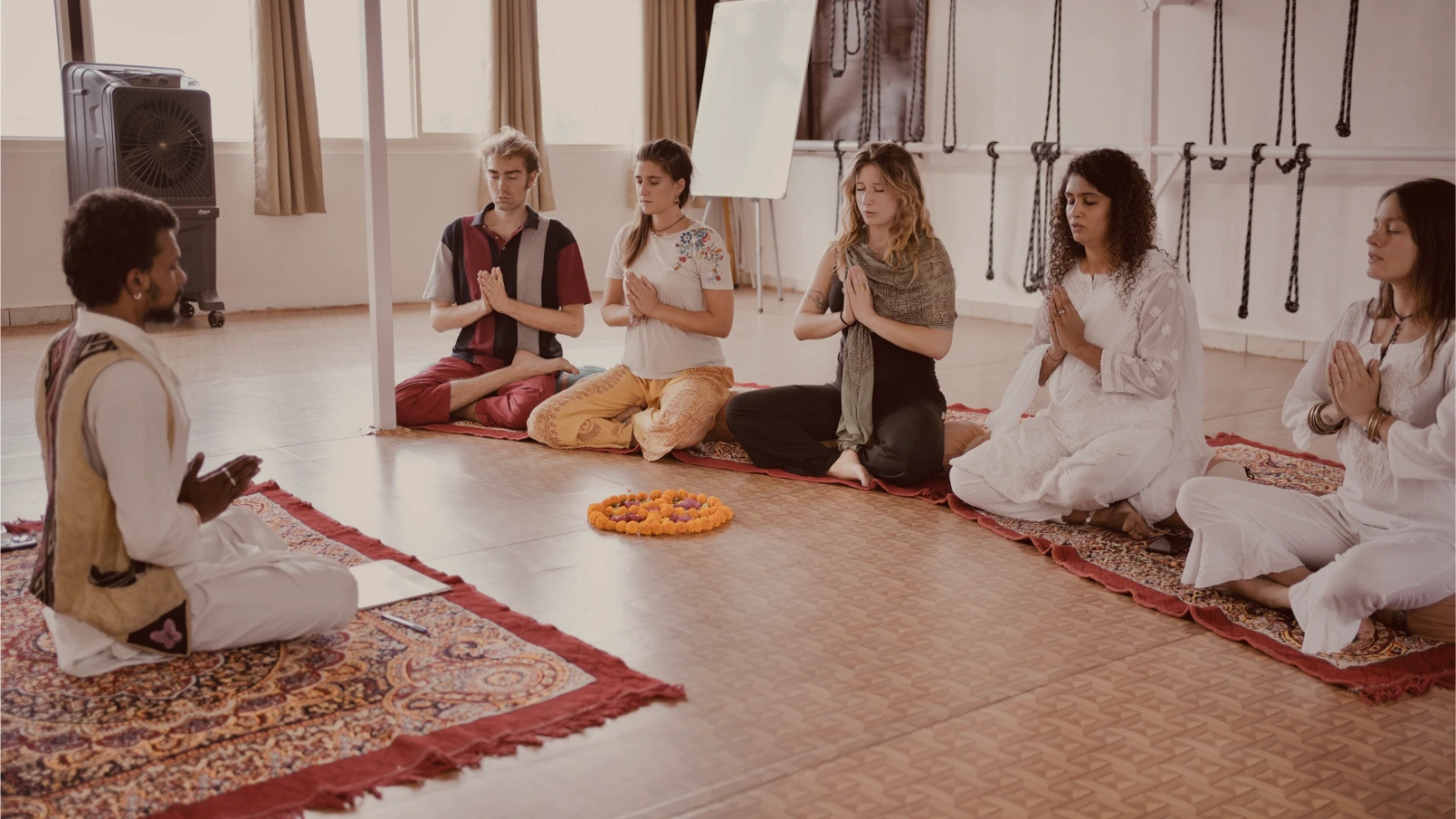
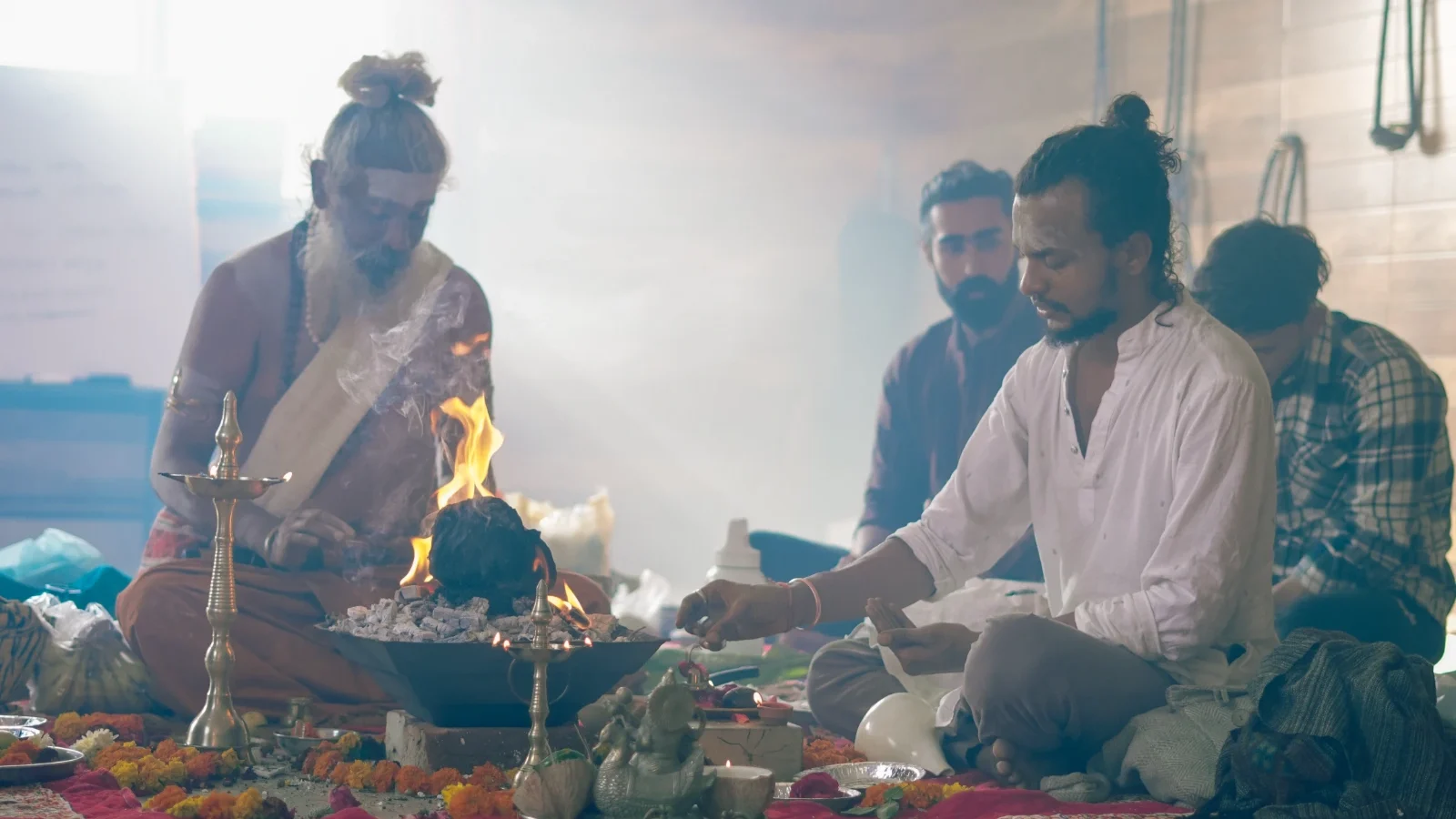
300 Hour Yoga Teacher Training in Rishikesh
- Duration: 28 Days
- Module: Residential with Ayurvedic Meals
- Level: Open to All Sincere Beginners
- Certification: Yoga Alliance RYT-500 Eligible (with prior 200-hour)
- Style: Advanced Hatha
- Batch Size: Maximum 15 Students
- Daily Hours: 10+ Hours of Instruction
For Practitioners Who Are Done with the Surface
You suspect the philosophy goes further than the summaries you were given. You suspect there is more to pranayama than the techniques. You feel that your asana is good but your practice is incomplete. You may have noticed that the teachers you most admire seem to know something you don't and that this something does not appear to be on any TTC syllabus.
The Prakruti 300-hour is built for this exact moment.
“A practitioner must grow with Viveka discernment knowing how they are moving forward. The systems must be perfected. There must be no chance of error. This is the work most courses skip.”
— Darshan | Founder, Prakruti Yogashala
The Honesty This Course Is Built On
The Prakruti 300 hour yoga teacher training in india is built differently because it begins from a different question: what does an advanced practitioner actually need to know, that the 200-hour could not yet give them?
The answer is: depth in the simple things, range across disciplines, and the philosophical and linguistic equipment to read yoga from the inside rather than from translation.
Who This Is For?
This is for you if...
- You have completed a 200-hour TTC, whether at Prakruti or elsewhere
- You have a genuine and consistent yoga practice
- You are seeking depth and transformation, not simply another certificate for your bio
- You are willing to dedicate yourself to ten hours of daily practice and study for four weeks
- You are open to ideas that may reshape how you teach, practice, and understand the world
- You are ready to question assumptions and explore yoga beyond the familiar
- You are sincere in your commitment to learning and growth
If this is you, read on.
This is not for you if...
- You are looking for another yoga holiday with a few classes each day
- You want a certificate more than a transformative learning experience
- You are unable or unwilling to maintain a ten-hour daily schedule
- You prefer comfort and certainty over challenge and inquiry
- You hold a fixed religious framework that cannot engage with diverse philosophical traditions
- You are unwilling to explore tantra, non-dualism, Jain karma theory, and other perspectives presented in the curriculum
- You are not prepared for the level of discipline, study, and self-reflection this training requires
Why So Few Schools Can Teach This
The team includes lineage holders in Hatha Yoga, Iyengar Yoga, Bhakti Yoga, Indian classical arts, and Kaula Tantra. Where most yoga schools rishikesh have two or three good teachers, Prakruti has eight to ten many of whom guest-teach at the city's largest schools. The school is deliberately not centered on a single guru. It is built on the older Indian model a team of master practitioners across traditions, in dialogue with each other, each contributing what they have spent their lives mastering.
The founder, Darshan from a Jain family, an engineer and physicist by training, with a background in plant management and physics teaching before turning fully to yoga is the unifying mind. His teachers include three Iyengar masters, a Hatha master, a Kaula Marg Tantra guru in Kerala, masters of the Gwalior gharana in Indian classical music and mentors in Ayurveda, Jyotisha, and Kalaripayattu. His original work on the semantics of Sanskrit and English translation is one of the things that makes the philosophy taught here readable rather than recited.
What Becomes Possible at This Level
Prana, moved at will. Advanced pranayama, including extended Kumbhaka, Bhastrika, Surya and Chandra Bhedana, with the understanding of subtle body anatomy (nadis, vayus, chakras as functional maps) that makes these practices coherent rather than mystical.
The Yoga Sutras, Chapters 3 and 4. The siddhis. Kaivalya. The chapters most courses gesture at and few actually teach.
Tantra philosophy non-dual tradition. Vedanta and the Upanishads in depth. Indian epistemology the Pramanas, the sources of valid knowledge. Karma theory in depth via Jain Darshana.
Ayurveda as a diagnostic tool. Reading constitution (Prakriti) and imbalance (Vikriti). Adapting practice for dosha. Counseling students intelligently on the relationship between food, lifestyle, and their yoga.
Sanskrit as a living language. Devanagari script, grammar foundations, reading selected sutras in the original. The semantic gap between Sanskrit and English Darshan's particular area of work becomes navigable.
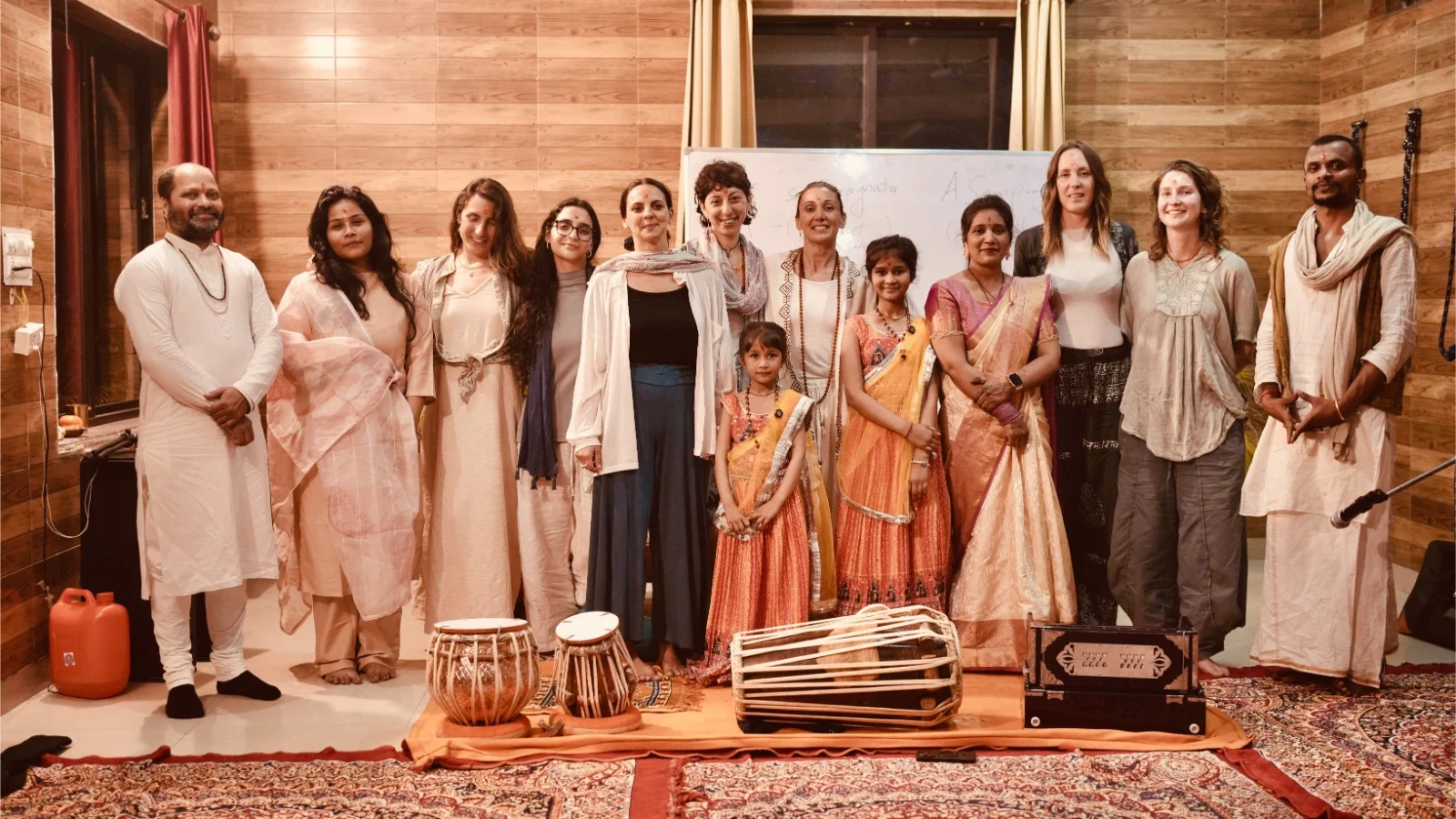
The classical arts as path. Indian classical music, Rasa theory, aesthetics as a path of self-knowledge. This dimension does not exist in standard TTC curricula. It exists here because the team has the lineages to teach it.
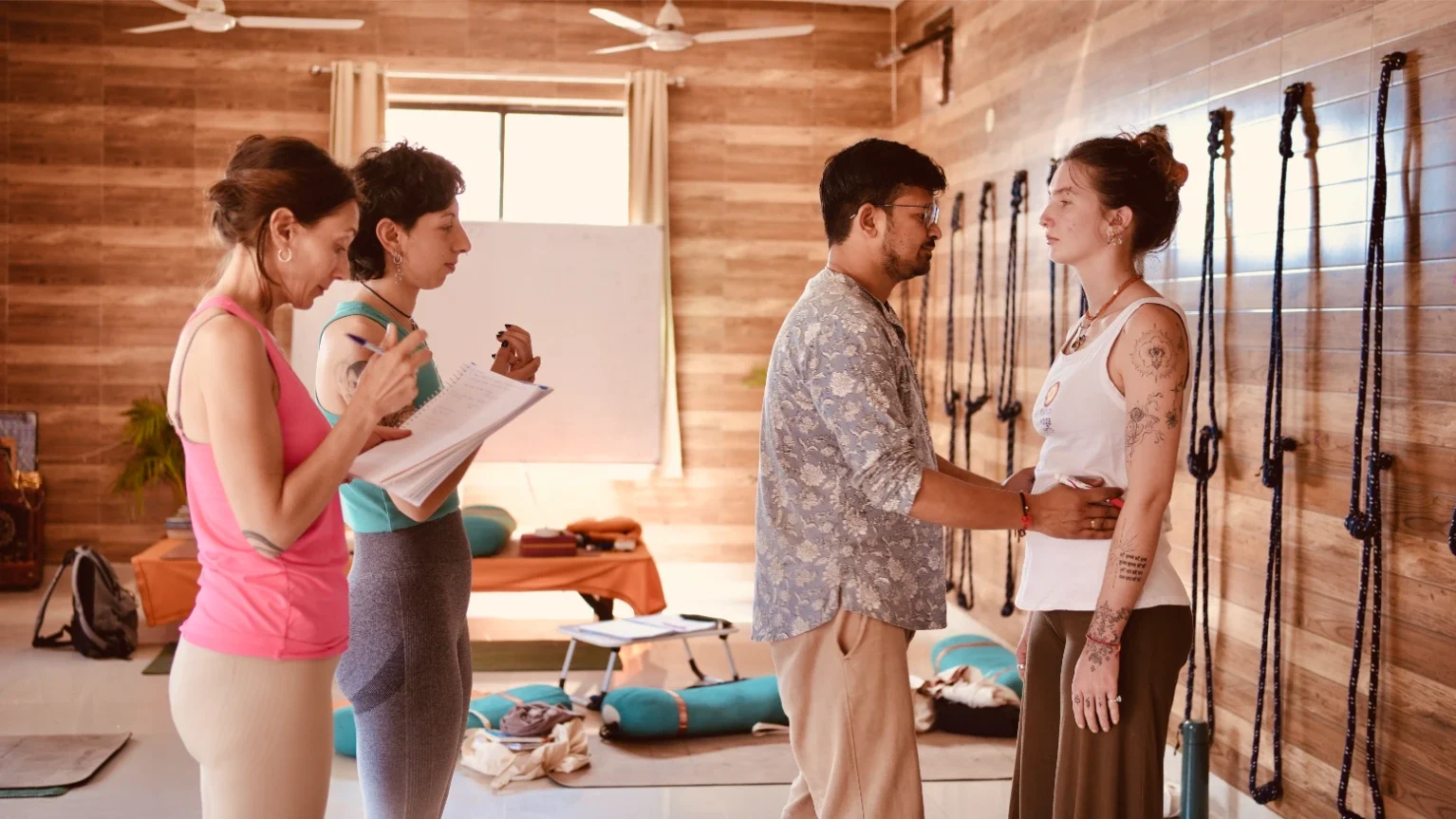
Advanced teaching. Not how to teach a class - how to design, adapt, and hold space for any student in any state. Significant in-class practice with feedback from Darshan and the team.
What Graduates Say
What Our Students Say About Us
Exploring the Core Elements of 300-Hour Yoga Teacher Training in Rishikesh- What will you embody?
- Daily asana, pranayama, vocal practice, meditation, yoga anatomy, and yoga philosophy
- Immersion into yogic lifestyle and Indian culture
- Daily fresh and healthy organic vegetarian/vegan/gluten-free meals
- Yoga Alliance Certification
Philosophy
- History of yoga
- Yoga Sutras of Patanjali
- Types of yoga
- The Eight Limbs of Yoga: Yamas and Niyamas
- Philosophy behind Asanas
- Concentration (Dharana) and its power
- The Universe (Brahman)
- Kundalini
- Chakras
- Karma from Jain Darshsnas
- Aspects of mind with yoga and Samkhya darshan
- Knowing the mind, ego, intellect and consciousness
- Samadhi
- Introducing Bhagavad Gita
- Yoga cleansing Neti (Jal, rubber)
- Kapalbhati (breath of fire)
- Trataka
- Agnisar Kriya
Pranayama
- Definition of Prana (vital force energy)
- Introduction to pranayama
- Difference between Prana and breath
- Movement of prana in the body
- Nadis (energy channels)
- Chakras and pranayama, aim and objectives
- Benefits and contraindications
- Relation between breath, mind and emotion
- Emotional purification treatment
- Pranayama and aging
- Quality of breathing
- Life span and breathing
- Abdominal breathing
- Clavicular breathing
- Thoracic breathing
- Diaphragmatic breathing
- Yogic breathing
- Ujayi
- Bastrika
- Kapalbhati
- Nadi Shodhana
- Surya and Chandra Bhedi
- Bhramari
- Sheetali and Sheetkari Breathing
- Agnisar Kriya
- Yoga cleansing Neti (jal, rubber)
- Snoring and controlling it
- Sitting postures for pranayama and meditation (sukhasana, ardha padmasana, ardha swastikasana, siddhasana)
- Mudras (jnana mudra, chin mudra, dhyana mudra, yoni mudra, shambhavi mudra, bhairavi mudra, nasikagra dristhi mudra, khechari mudra)
- Bandhas (energy lock)
- Preparation for Bandhas
- Granthis - 3 knots in the spine
- Energy blockages and their removal
- Cleaning the energy through bandha
- Kundalini awakening with the help of Bandhas
- Mula Bandha (Root Lock)
- Uddiyana Bandha (Abdominal Lock)
- Jalandhara Bandha (Thoracic Lock)
- Maha Bandha-Mula + Uddiyana + Jalandhara (Great Lock)
Meditation (Dhyanam)
- Introduction and preparation
- Breathing awareness and mindfulness
- Aum meditation
- Mantra meditation
- Trataka (candle gazing)
- Dynamic (Osho) meditation
- Nadabrahma meditation
- Tantric and Kundalini meditation
- Practicing silence
- Techniques to improve concentration
- Ajapa Meditation
- Japa meditation
- Antar Mouna
Yoga Anatomy
- Brief overview
- Story of evolution of structure
- Physiology and System
- Musculoskeletal system: In detail for better understanding of asana practice
- Guidelines to asana anatomy and alingment
- Muscle functions during joint movements
- Nervous system: Sympathetic and Parasympathetic nervous system
- Respiratory system
- Circulatory system
- Gastointestenial system
- Endocrine system
- Organs
- Nadis and Chakras
Introduction to Indian classical Arts & Music
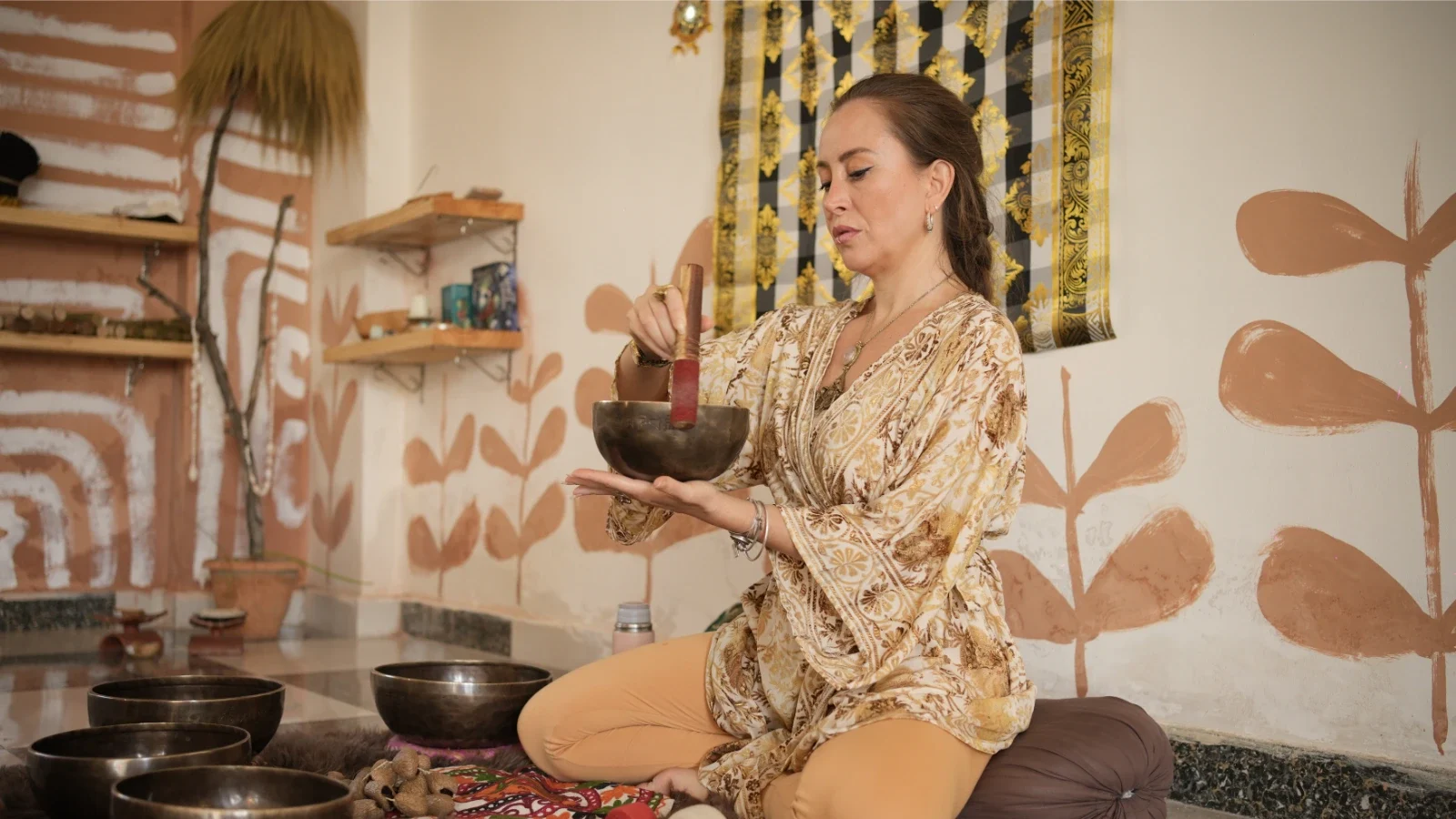
- Explore the transformative world of Indian Classical Arts & Music
- Learn how these ancient traditions serve as tools for inner growth and holistic wellness
- Immerse yourself in a rich cultural heritage that expands awareness and emotional depth
- Experience classical music as pathways to harmonize mind, body, and spirit
- Go beyond technique, connect with the essence of the music of silence
Hatha Yoga Exploration
- Use physical practice as a gateway to spiritual growth
- Improve flexibility, strength, and alignment with guided techniques
- Learn to move with awareness, control, and purpose
- Understand the subtle role of hands and feet as energy guides
- Explore grounding and energetic balance in your postures
- Integrate breath with movement for a meditative flow
- Cultivate focus, stillness, and inner connection through breath awareness
Ayurveda Immersion
- Personalize well-being through Prakriti (constitution) and Vikriti (imbalances)
- Learn the doshas (Vata, Pitta, Kapha) and balance the five elements
- Understand the Trigunas (Sattva, Rajas, Tamas) and their role in food and mind
- Use Ayurvedic herbs and remedies for natural healing
What is the 300-Hour Yoga Teacher Training (YTT) Course?
The 300-Hour YTT is an advanced teacher training program designed for certified yoga teachers who want to deepen their practice, teaching skills, and understanding of traditional yoga. It builds on the foundation of a 200-hour certification and prepares students for advanced teaching and personal growth.
Who can join this course?
The course is open to students who have completed a 200-Hour Yoga Teacher Training from a recognized yoga school. Applicants should have a regular yoga practice, good physical fitness, emotional maturity, and the willingness to commit to the discipline and intensity of the program.
Are there any health requirements or restrictions?
Yes. The course is physically demanding and requires healthy joints, a strong core, good stamina, and the ability to practice daily yoga and pranayama.
This course is not recommended for individuals with:
- Uncontrolled high blood pressure
- Heart or neurological conditions
- Chronic neck, shoulder, knee, or back injuries
- Pregnancy
- Other serious medical conditions without prior consultation
If you have any medical concerns, please contact us before registering.
Is the 300-Hour course Yoga Alliance certified?
Yes. Upon successful completion, and together with your existing 200-hour certification, you'll be eligible to register as an RYT-500 with Yoga Alliance.
How is the 300-Hour TTC different from the 200-Hour TTC?
The 300-Hour program is an advanced training that explores yoga in greater depth, including advanced asanas, anatomy, sequencing, teaching methodology, philosophy, Sanskrit, Ayurveda, therapeutic applications, and spiritual practices.
What does the curriculum include?
The curriculum combines practical training with advanced theory, including:
- Advanced Asana Practice
- Teaching Methodology
- Yoga Philosophy
- Sanskrit Semantics
- Ayurveda
- Anatomy & Alignment
- Pranayama & Meditation
- Naada Yoga
- Sequencing
- Injury Prevention
- Therapeutic Applications
What yoga postures and practice sequences will I learn?
Students deepen their practice through the complete Ashtanga Primary Series, advanced Vinyasa sequencing, Surya Namaskar, standing and seated postures, inversions, backbends, arm balances, restorative practices, and specialized sequences including hip openers, warrior series, forward folds, and yogic jogging.
What will I gain from this course?
You'll develop advanced teaching skills while deepening your understanding of yoga philosophy, Sanskrit, Ayurveda, and traditional Indian knowledge systems. The course is designed to enhance your practice, expand your perspective, and support long-term spiritual and personal growth.
What teaching skills will I develop?
The course prepares you to become a more confident and effective teacher through:
- Teaching practice
- Demonstrations
- Alignment and adjustments
- Class sequencing
- Positive communication
- Student observation
- Voice modulation
- Time management
- Professional teaching methodology
What lifestyle changes can I expect after completing the course?
Beyond improving your teaching abilities, the program encourages a more mindful lifestyle through disciplined yoga practice, Ayurveda, spiritual study, and self-awareness. Many students experience greater physical vitality, mental clarity, and a deeper connection with yogic living.
How long is the course?
The 300-Hour Yoga Teacher Training is a 28-day residential program conducted at Prakruti Yogashala in Tapovan, Rishikesh.
What kind of personalized guidance can I expect?
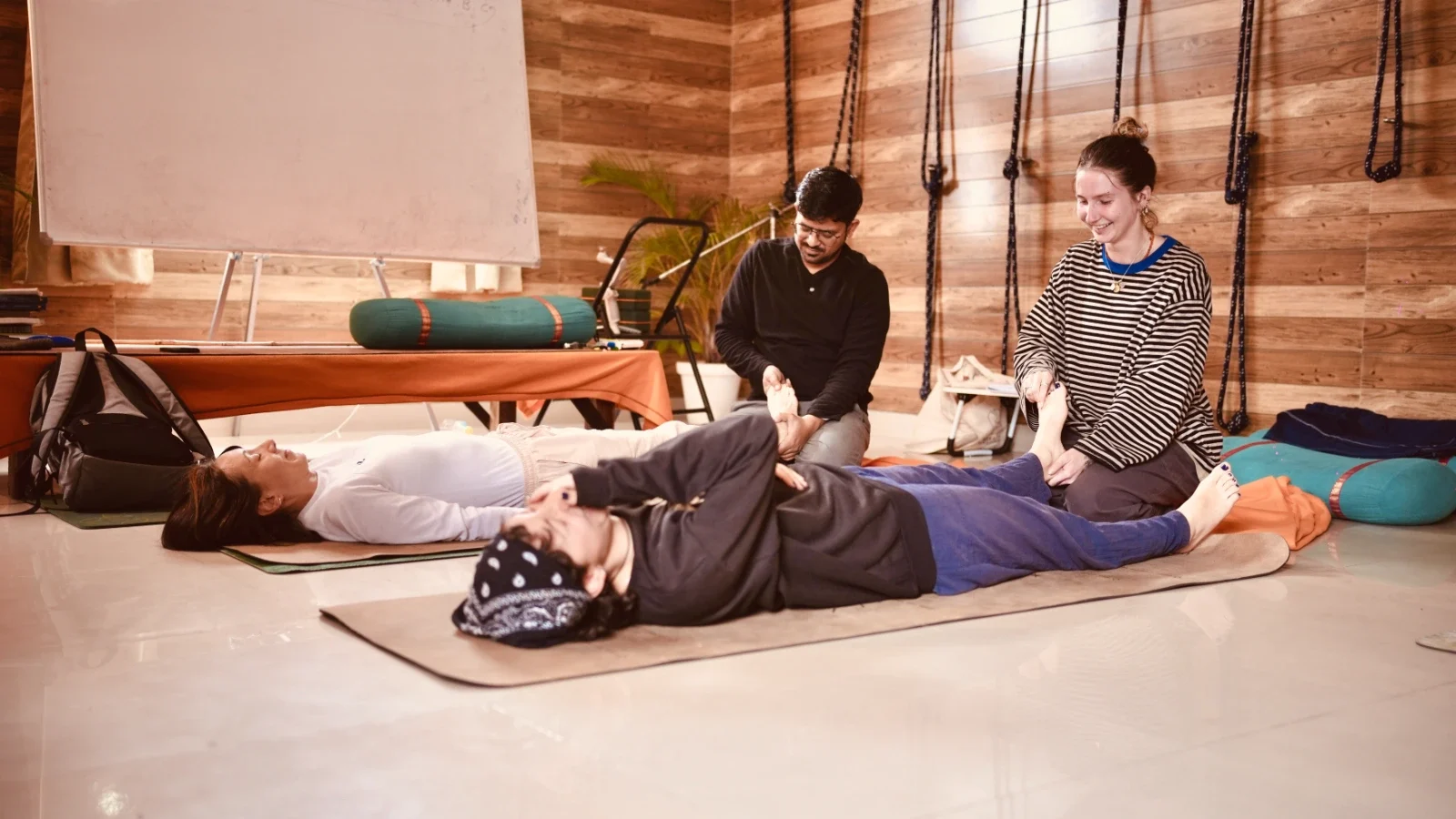
Classes are conducted in small batches to ensure personalized attention. Experienced teachers provide continuous guidance, individual feedback, and hands-on support throughout the training.
How are students assessed?
Students are evaluated through practical teaching, written and oral examinations, attendance, overall performance, and professional conduct throughout the course.
What spiritual concepts are explored during the course?
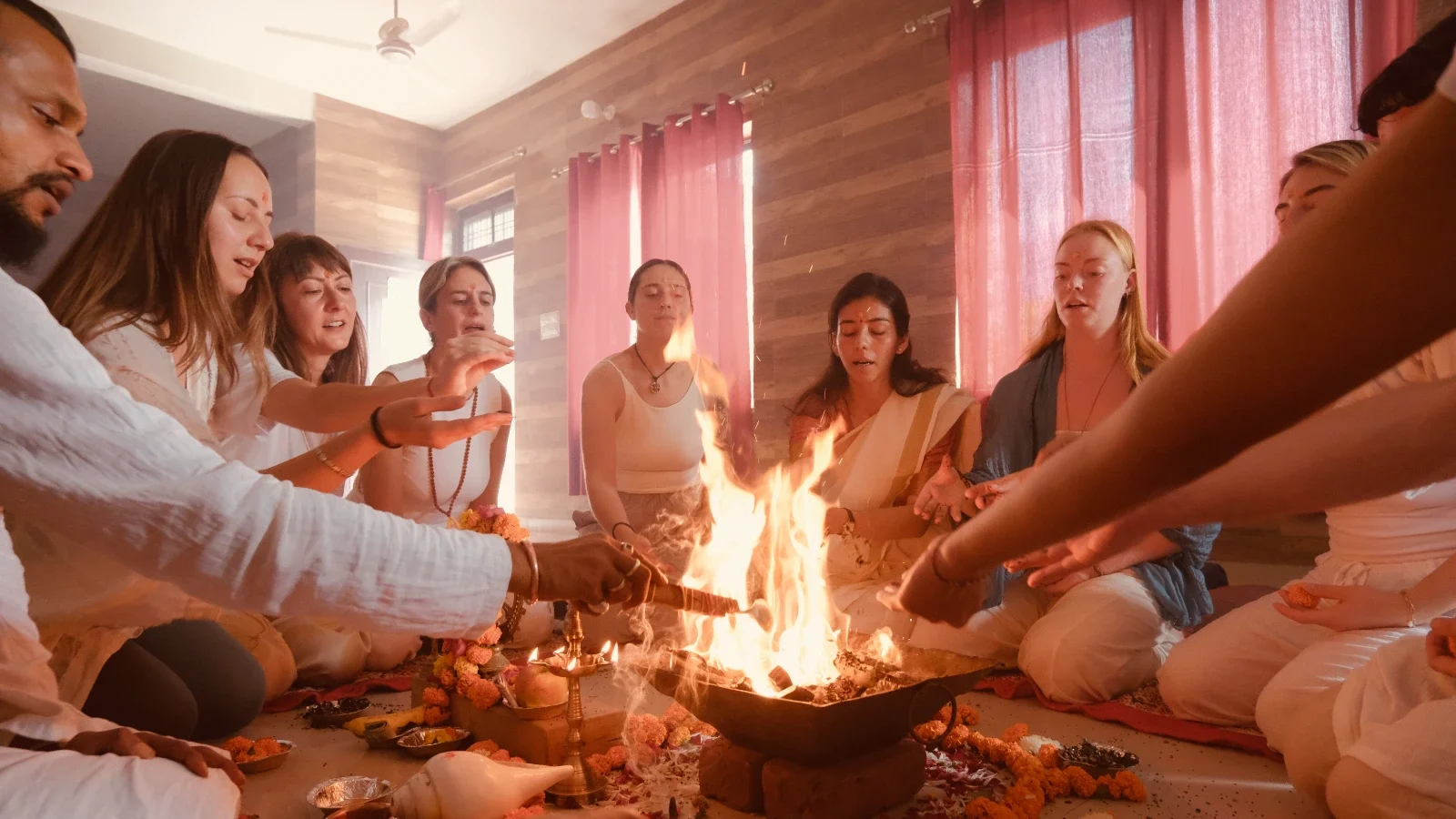
The program explores traditional Indian philosophy through topics such as Tantra, Samkhya, Patanjali Yoga Sutras, Kundalini practices, Ishvara Pranidhana, Naada Yoga, Sanskrit semantics, and the relationship between the individual self and the cosmos—all taught in a safe, guided, and practical manner.
A Day at Prakruti
$1,949
/Per Person
- Full 300-hour training
- Accommodation
- Satvik Breakfast, Lunch, High Tea & Dinner
- Course materials
- Guided excursion
- Alumni support
$2,099
/Per Person
- Full 300-hour training
- Accommodation
- Meals
- Course materials
- Guided excursion
- Alumni support