

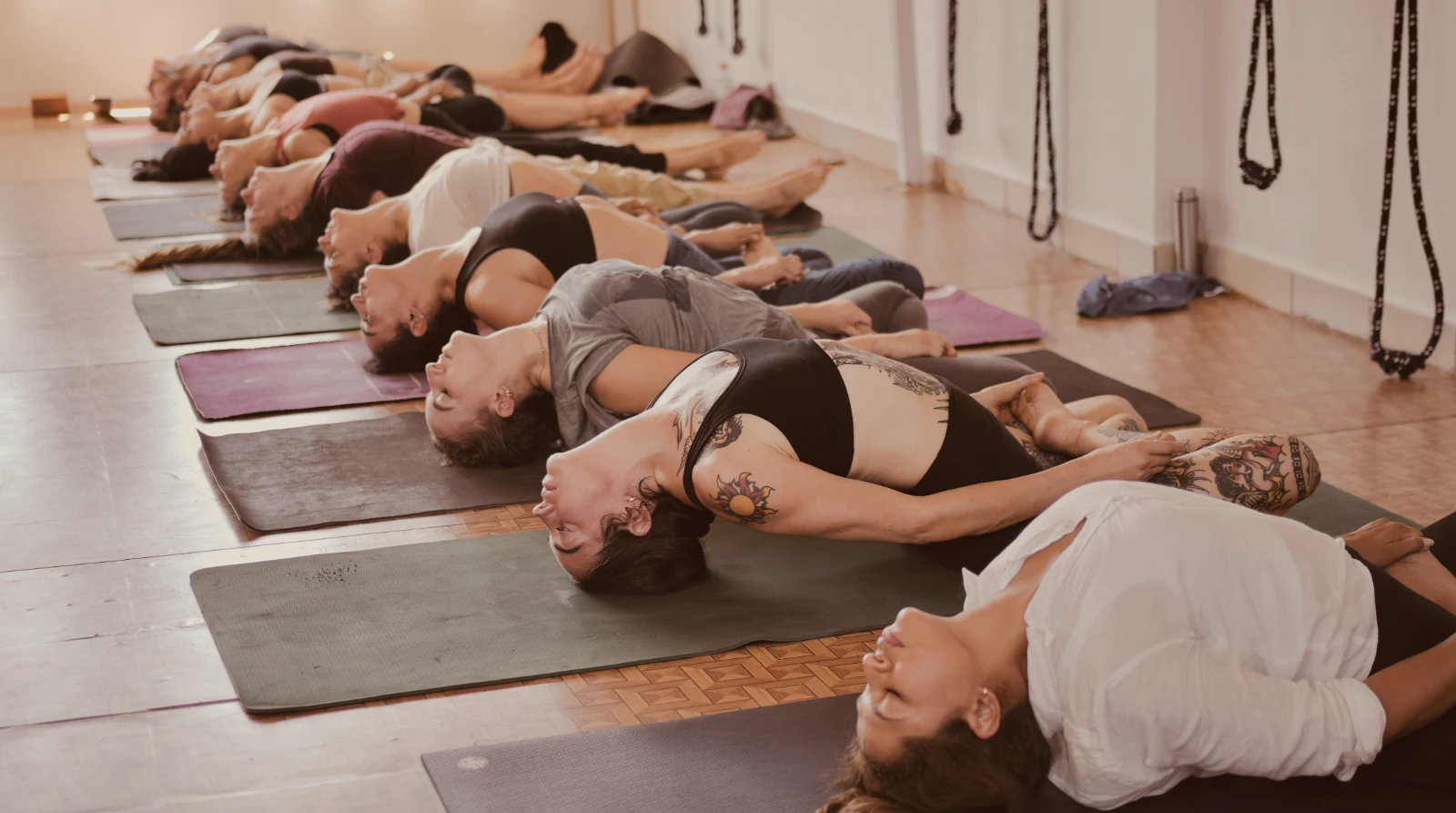
The 100 Hours Yoga Teacher Training in Rishikesh
- Duration: 12+1 Days
- Module: Residential with Yogic Meals
- Level: Open to All Sincere Beginners
- Certification: Yoga Alliance CE Eligible
- Style: Hatha - Iyengar (Foundations & Alignment)
- Batch Size: Maximum 15 Students
- Daily Hours: 10+ Hours of Instruction
Begin Where Real Practice Begins
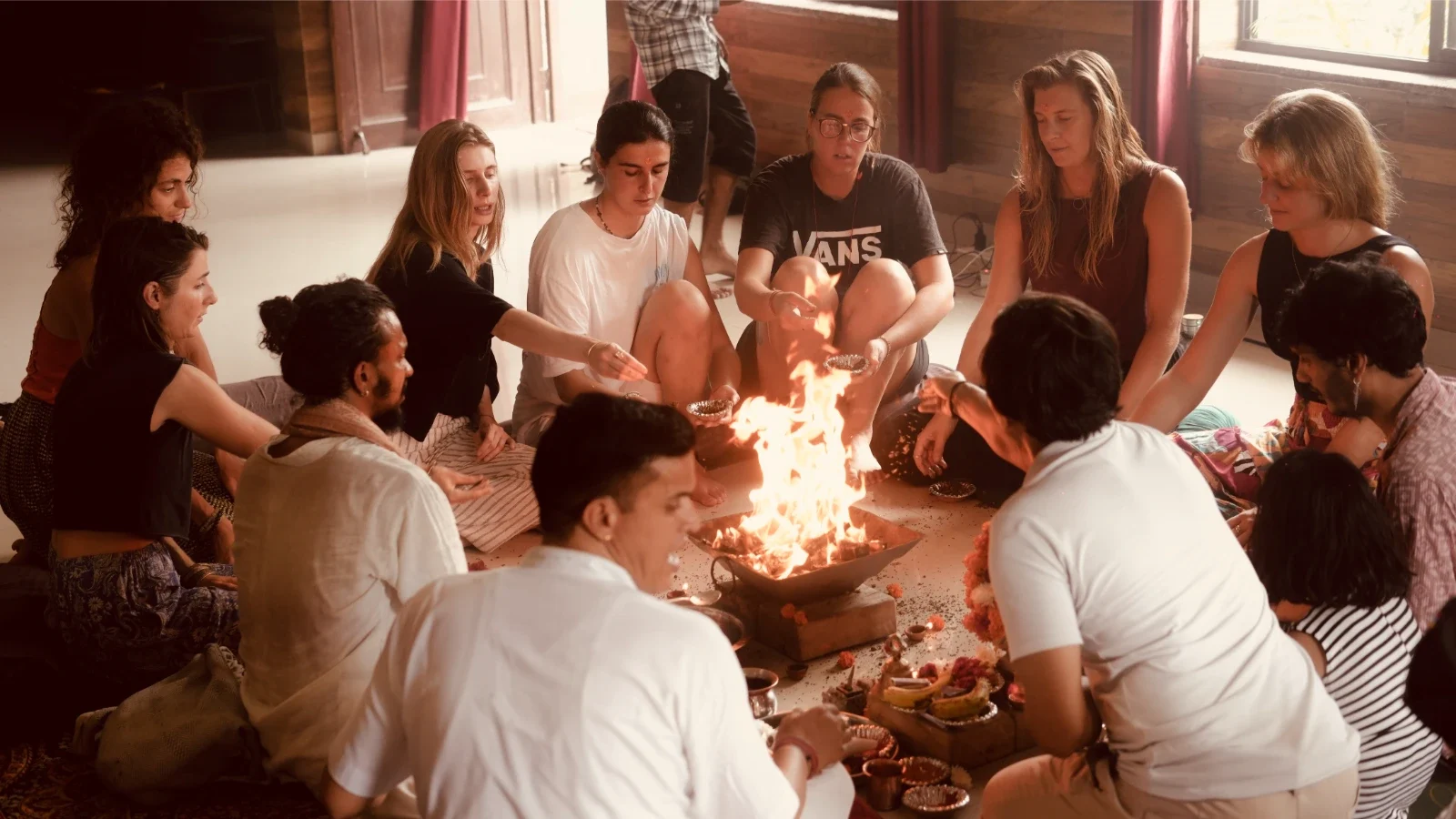
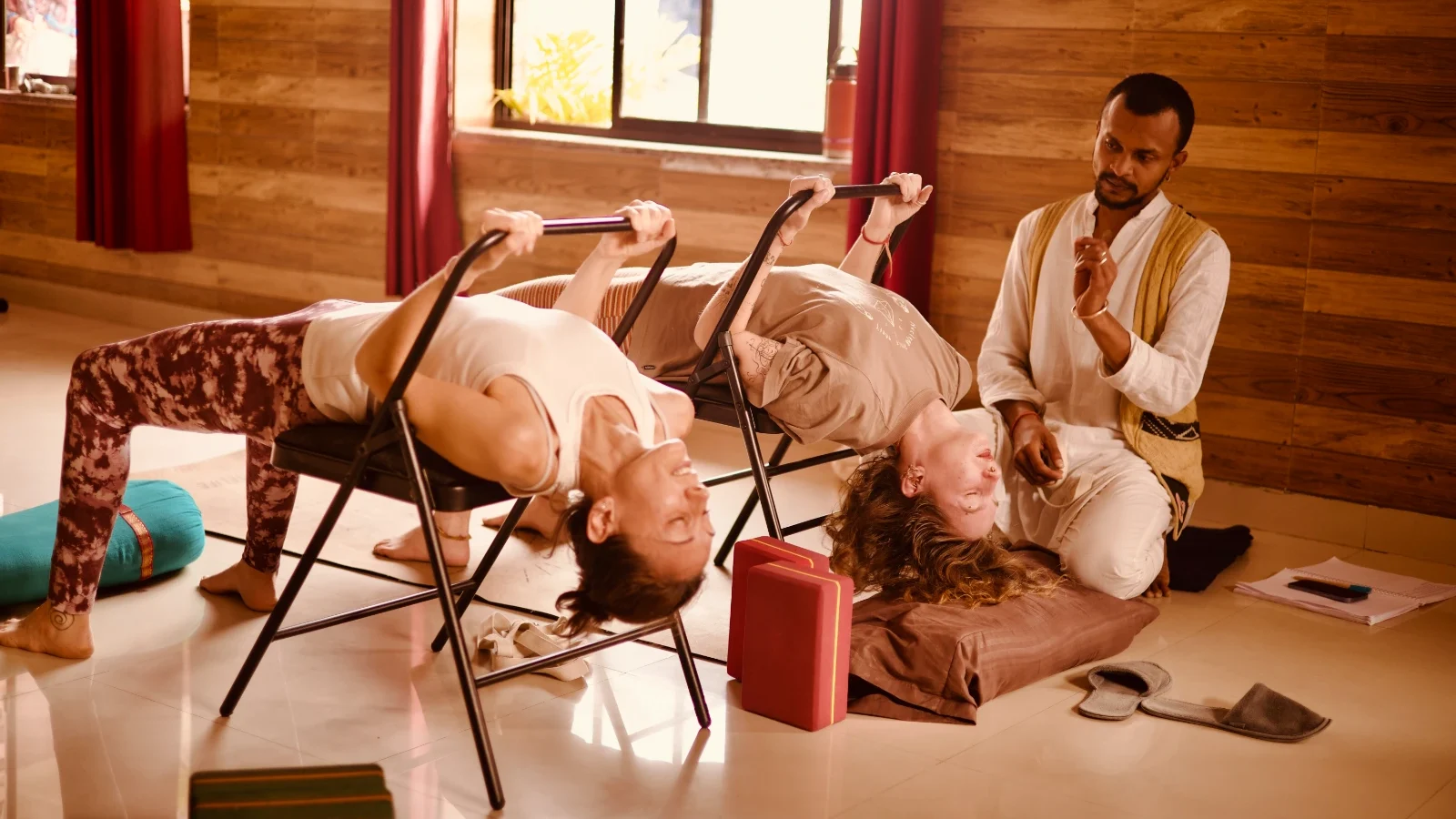
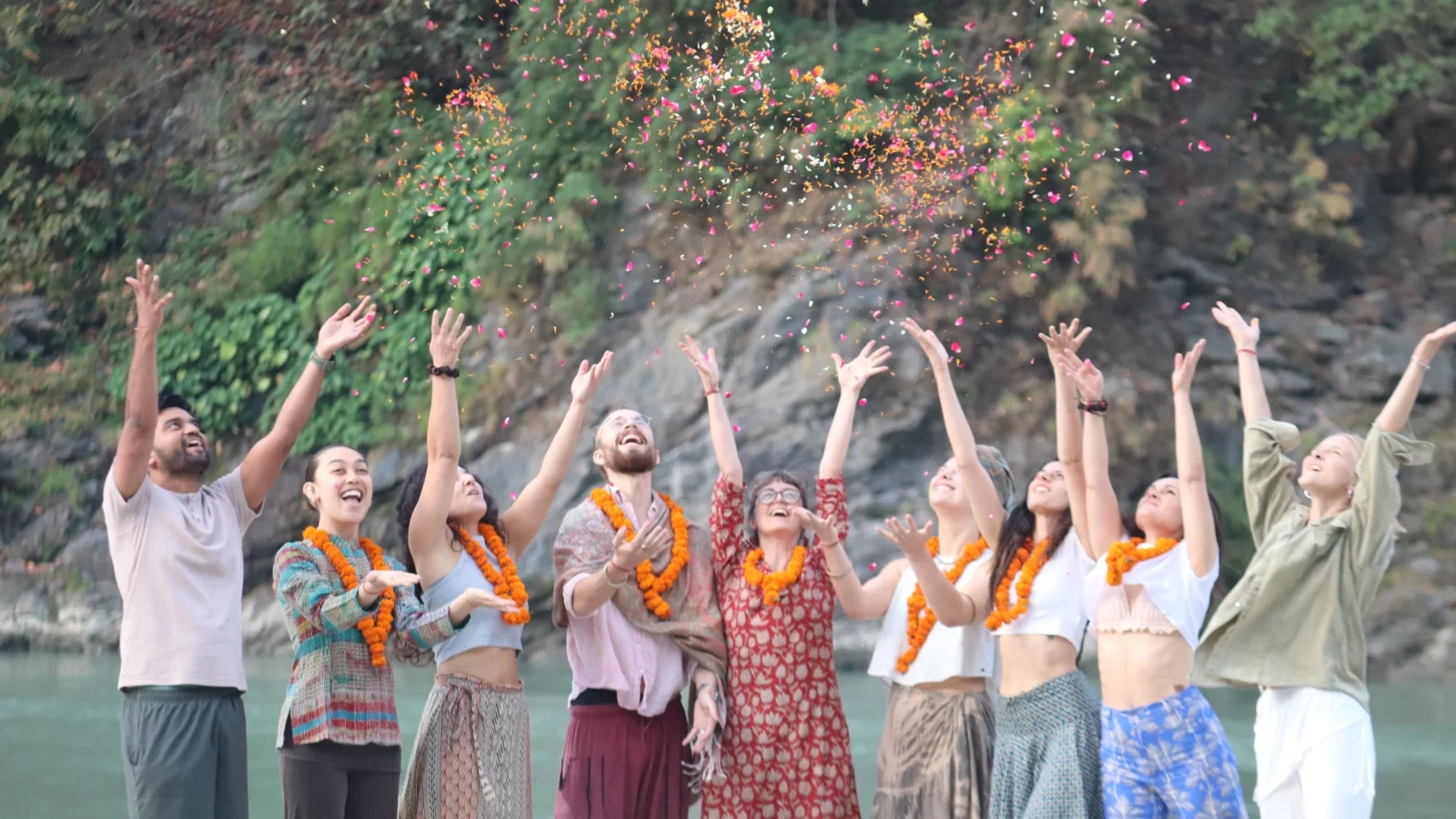
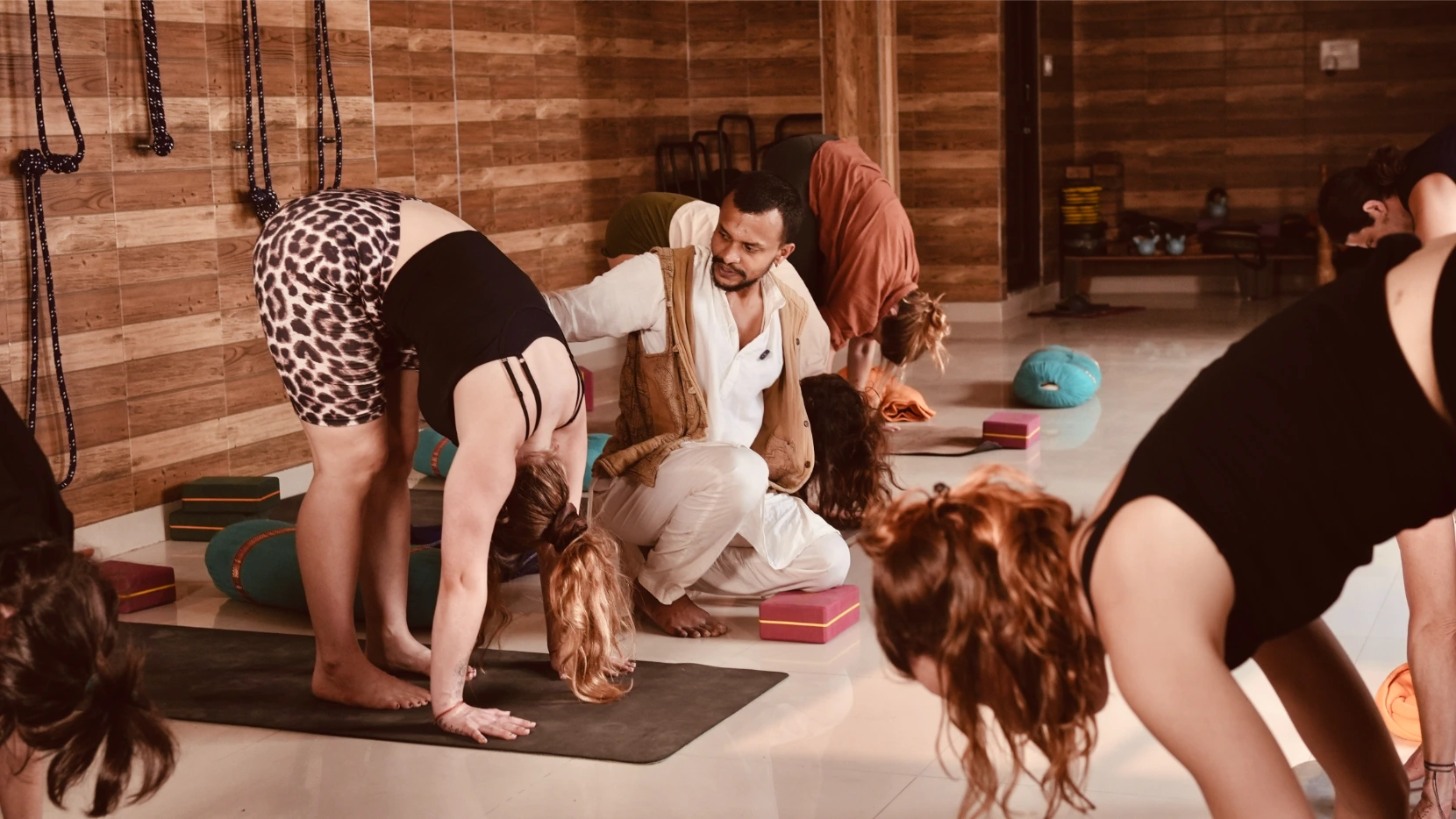
This is a small course by design: fifteen students, a faculty of eight to ten teachers, a daily rhythm modeled on the Gurukul. You will not get lost in a crowd. You will be seen, corrected, and known.
“Doing a handstand does not make you a yogi. It is the depth of penetration in simple poses the ability to move prana in the body at will with simple instruction that makes a practitioner.”
— Darshan | Founder, Prakruti Yogashala
If this is what you came to yoga looking for, you are in the right place.
Who This Is For?
This is for you if...
You are sincere about yoga. You want to start with depth, not with fitness disguised as spirituality, body, your mind, and your culture.
- Willing to wake before dawn and study 10+ hours a day
- Want to start correctly - not just fast
- Complete beginner or experienced practitioner - both welcome
- Trying to find a school that won't waste your two weeks
If this is you, read on.
This is not for you if...
If you are looking for a yoga holiday -a soft retreat with a little practice on the side, Prakruti will be the wrong choice. We say this not to discourage but to protect both your time and ours.
- Not willing to keep a daily schedule of ten hours
- Cannot meet new ideas with an open mind
- Carry a strongly fixed religious view that cannot sit with the questions yoga asks
Why Prakruti?
The school was founded by Darshan, who comes from a Jain family and spent years as a product engineer and plant manager at a multinational before teaching physics. He left that world after recognizing that modern education - and the lenses it gives us for reading reality - is itself one of the reasons people cannot find depth in their practice.
He turned full-time to yoga and to the reform of Indian education through the Gurukul model, studying under masters across traditions:
- Three Iyengar teachers
- A Hatha master
- A Kaula Marg Tantra guru in Kerala
- A Gwalior gharana musician for Indian classical music
- Mentors in Ayurveda, Jyotisha, and Kalaripayattu
What Makes Darshan's Teaching Different?
What Our Students Say About Us
What You Will Learn
01. The Hands and the Feet
Every advanced posture you will ever attempt rests on what you do with your palms and your feet. Darshan's first-week teaching on this is what most students describe - even ones who have practiced for years elsewhere - as the moment they realized how much they had been compensating.
02. The Breath, Not Breathing Exercises
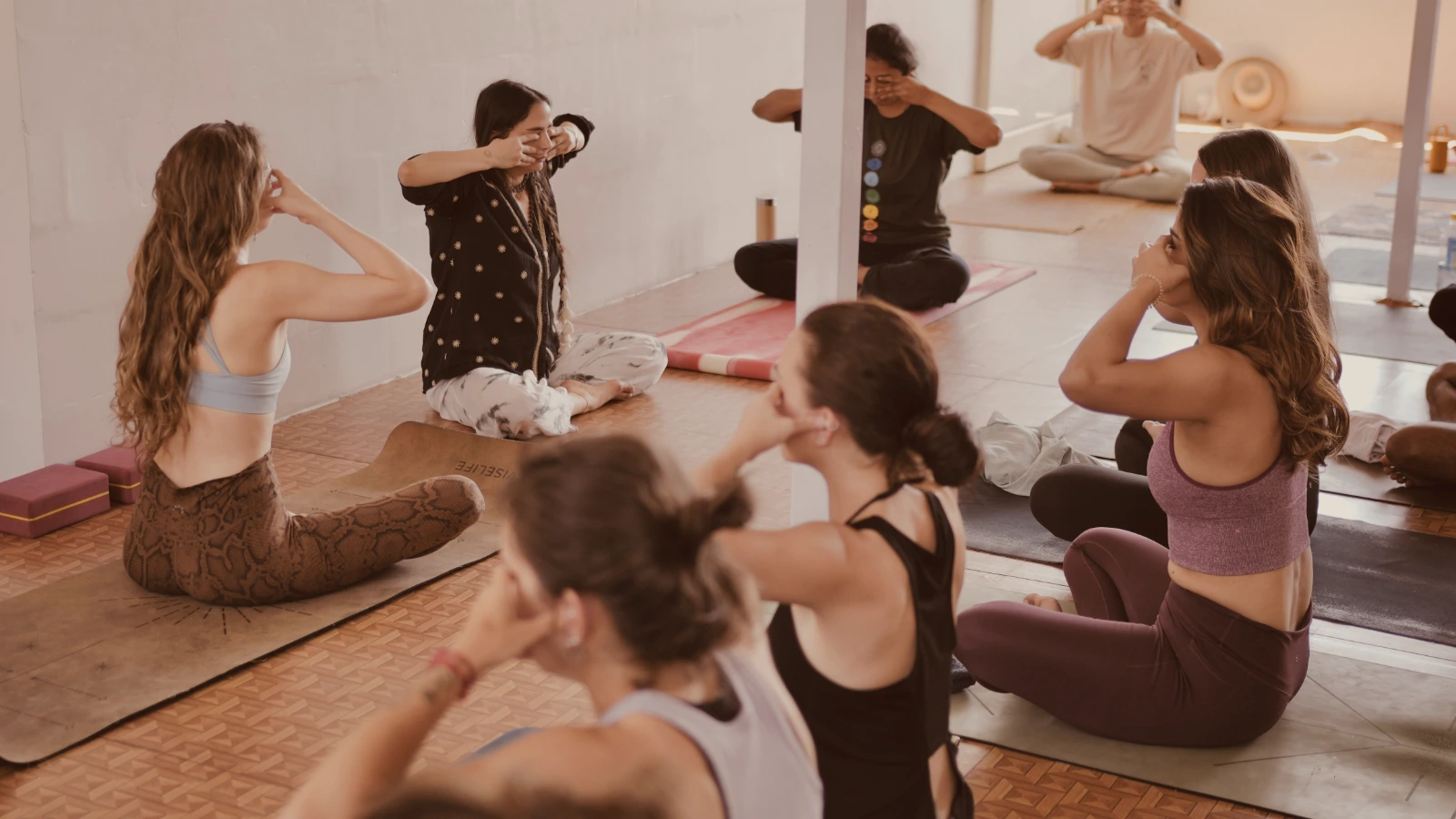
You will learn Nadi Shodhana, Kapalbhati, Trataka, and the foundational shatkarmas including Jal Neti. More importantly: the principle that gives pranayama its name - the movement of prana, and what it means to direct it.
03. Yoga Philosophy as a Living Lens
An introduction to the Yoga Sutras, the eight limbs, the concept of Prakriti, and Samkhya as a practical map of the mind. Taught not as material to memorize but as a way of seeing.
04. Mantra, Sound and Nada Yoga
The science of vibration, the meaning behind Aum, and foundational mantras with their context. Drawn from a Gwalior gharana lineage in Indian classical music - a rare thread in any TTC.
05. Yoga Nidra
The first skill of a serious practitioner is the ability to consciously rest. You will learn the practice and the framework - the four states of consciousness - that gives it its power.
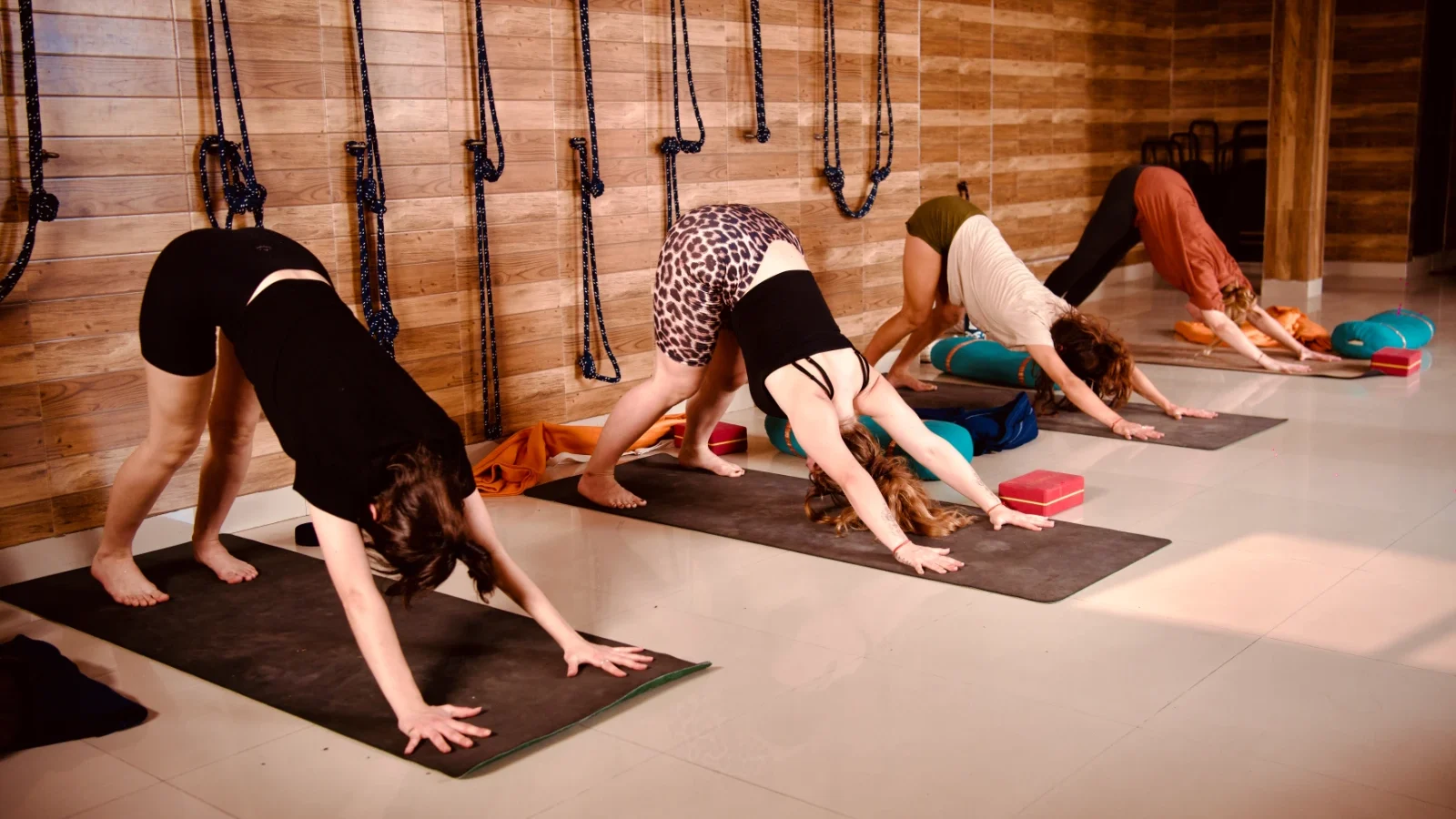
06. Hatha Asana - Foundations & Alignment
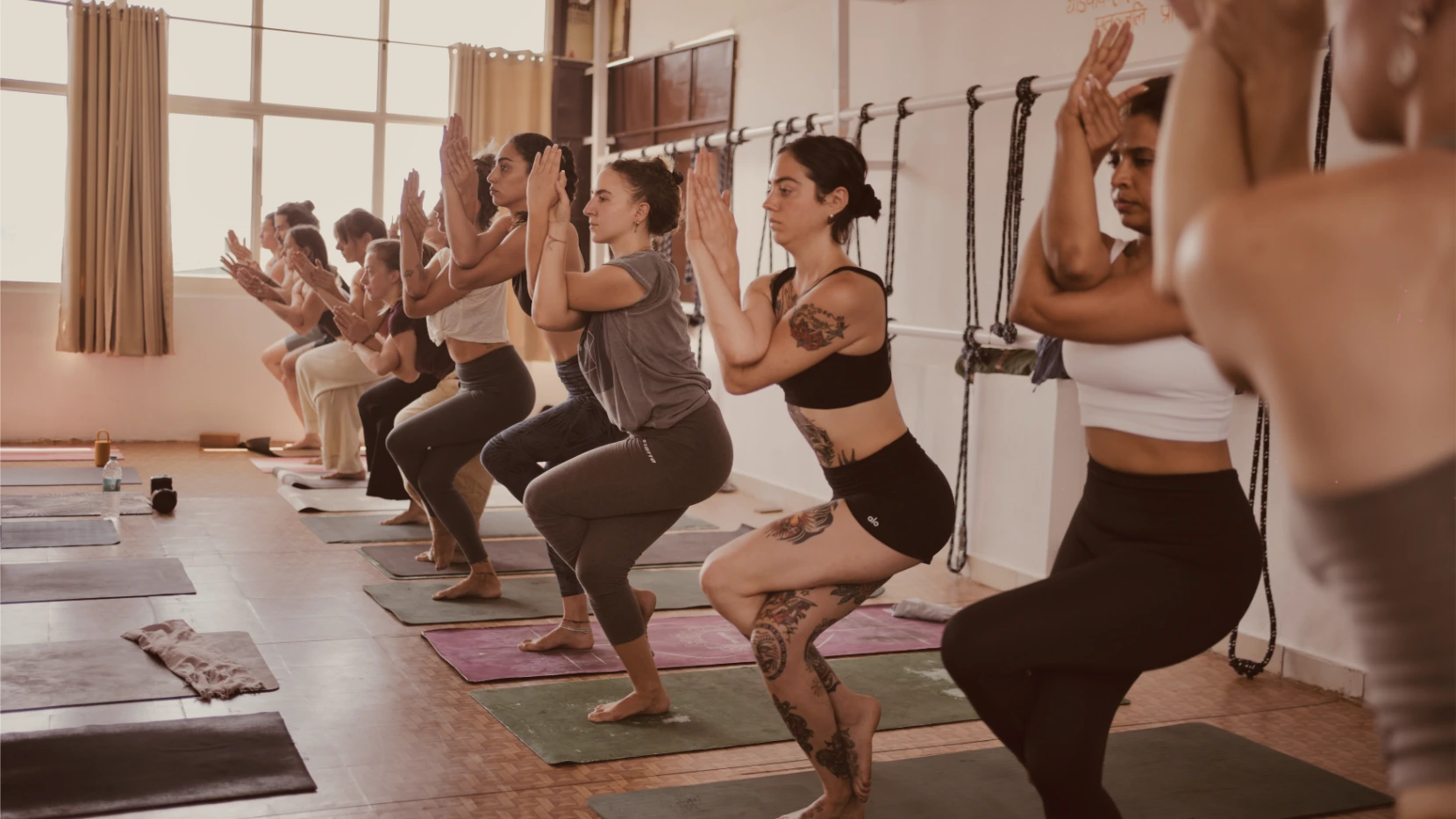
Postures taught correctly, not impressively. The philosophy behind each asana, anatomy as it relates to practice, and how to progress safely over years - not push through in two weeks.
Also Covered in the Curriculum
- The Eight Limbs of Yoga - Yamas and Niyamas
- Philosophy behind Asanas
- Concentration (Dharana) and its power
- Kundalini - introduction and context
- Yoga Practicum
- Breathing & Pranayama Practices
- Satkarma - Cleansing Exercises
- Practice Relaxation & Preparation for Yogic Sleep
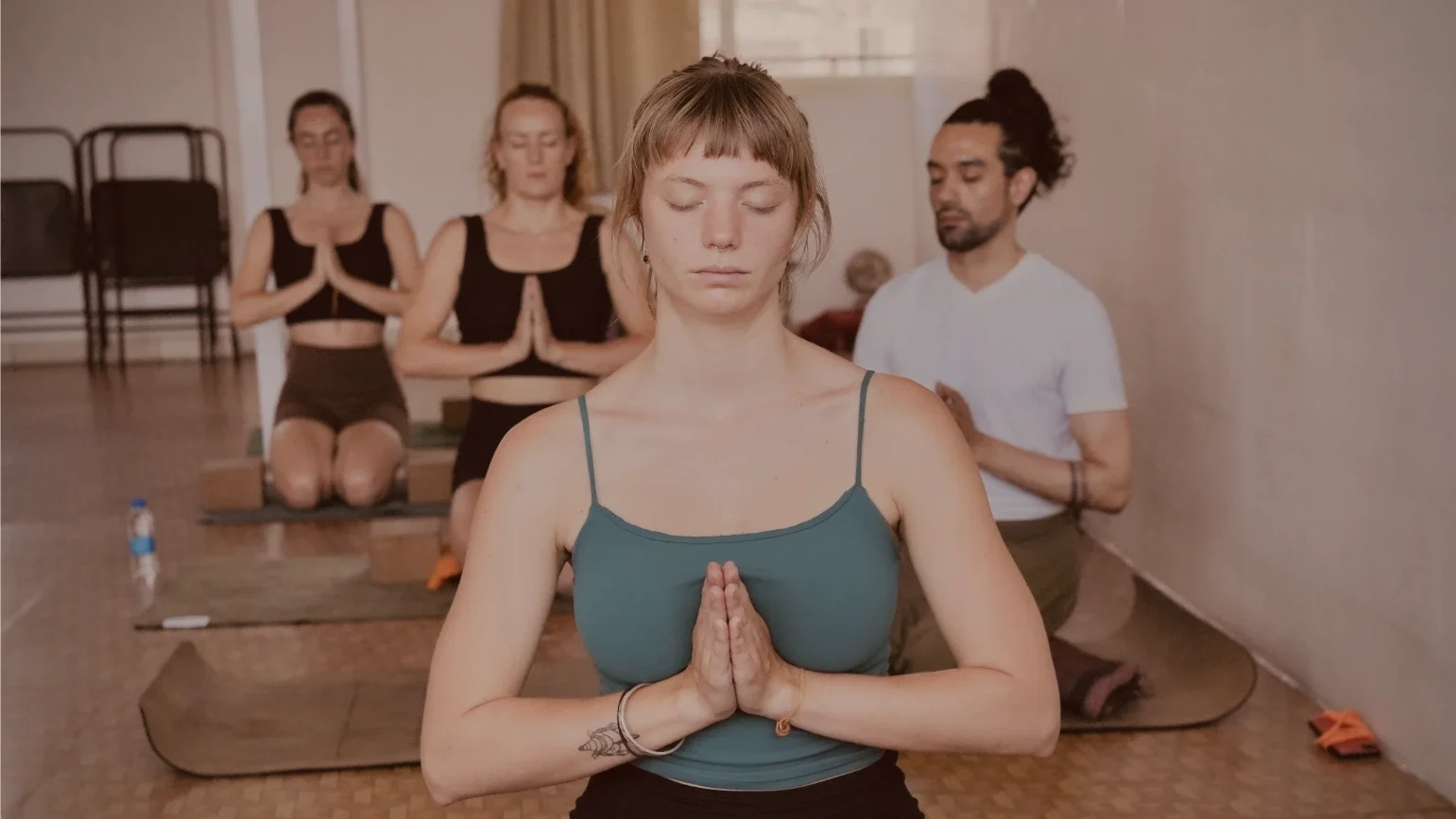
- Meditation
- Yoga Anatomy & Physiology
- Introduction to Indian Classical Arts & Music
- Teaching Methodology & Ethics
- History of Yoga
- Yoga Alliance CE eligible - 100 hours
What is the 100-Hour TTC?
An introductory teacher training course designed for beginners, aspiring teachers, or anyone looking to deepen their yoga practice without committing to a full 200-hour certification.
Who is this program suitable for?
Yoga enthusiasts, aspiring teachers, and individuals who want to deepen their personal practice, understanding, and self-awareness. Beginners are welcome.
Will I be certified to teach after completing the 100-Hour TTC?
The 100-hour course is not a standalone teaching certification. It is a foundational program and can contribute toward further training, but a 200-hour TTC is required for full Yoga Alliance registration.
What topics are covered?
The program covers yoga philosophy, foundational asanas, pranayama, meditation, and basic teaching techniques. Through theory, practice, group discussions, and self-study, you will deepen your practice and build a foundation for teaching yoga.
Do I need prior yoga experience?
No. Sincere beginners are welcome. Some familiarity with yoga can be helpful, but it is not required. What matters most is your seriousness of intent.
How is the course structured?
A mix of theory, practice, group discussions, and self-study across 12 days.
Is the 100-Hour TTC recognised internationally?
It is a foundational program, not a standalone teaching certification. Completing a 200-hour TTC is required to register with Yoga Alliance.
What are the benefits of this course?
It deepens your practice, enhances self-awareness, and lays the foundation for becoming a yoga teacher.
A Day at Prakruti
A Day at Prakruti
How the Day Unfolds
Morning Practice
The day begins at 5:30 AM. Shatkarma cleansing practices, pranayama, and self practice before vocal activation and mantra at 8 AM. The body and breath are prepared before any asana begins.
Midday Study
Hatha Yoga and Alignment at 9 AM is followed by breakfast. Yoga Philosophy at 11:30 AM - the Sutras, Samkhya, the eight limbs - as living study, not lecture. Anatomy at 2:45 PM.
Evening Practice
A second Hatha Yoga and Alignment session at 4 PM - longer, deeper. Meditation at 5:30 PM. Communal dinner at 6:30 PM. Lights off at 10 PM. Sleep is part of the practice.
The Gurukul Rhythm
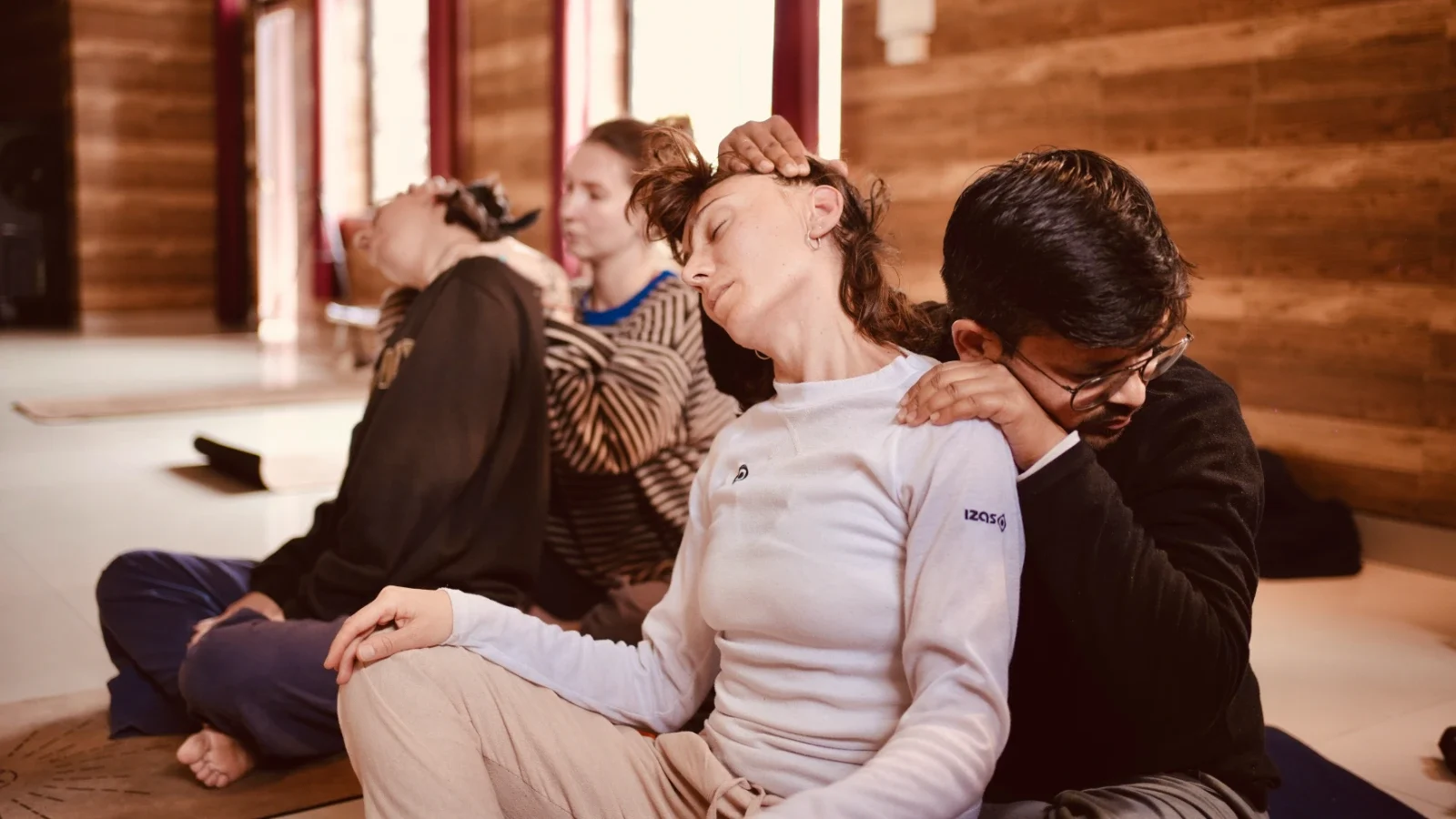
At Prakruti this means the course does not end when the session ends. The meals are part of it. The rest time is part of it. The conversations over dinner are part of it. You will be seen, corrected, and known - not just in the shala but throughout the day.
Throughout your stay we encourage you to embrace the yogic lifestyle fully: balanced diet, ample rest, and mindfulness in all actions. By immersing yourself wholeheartedly in the practice, you will discover insights that stay with you long after the training ends.
Meals & Accommodation
Ayurvedic Meals
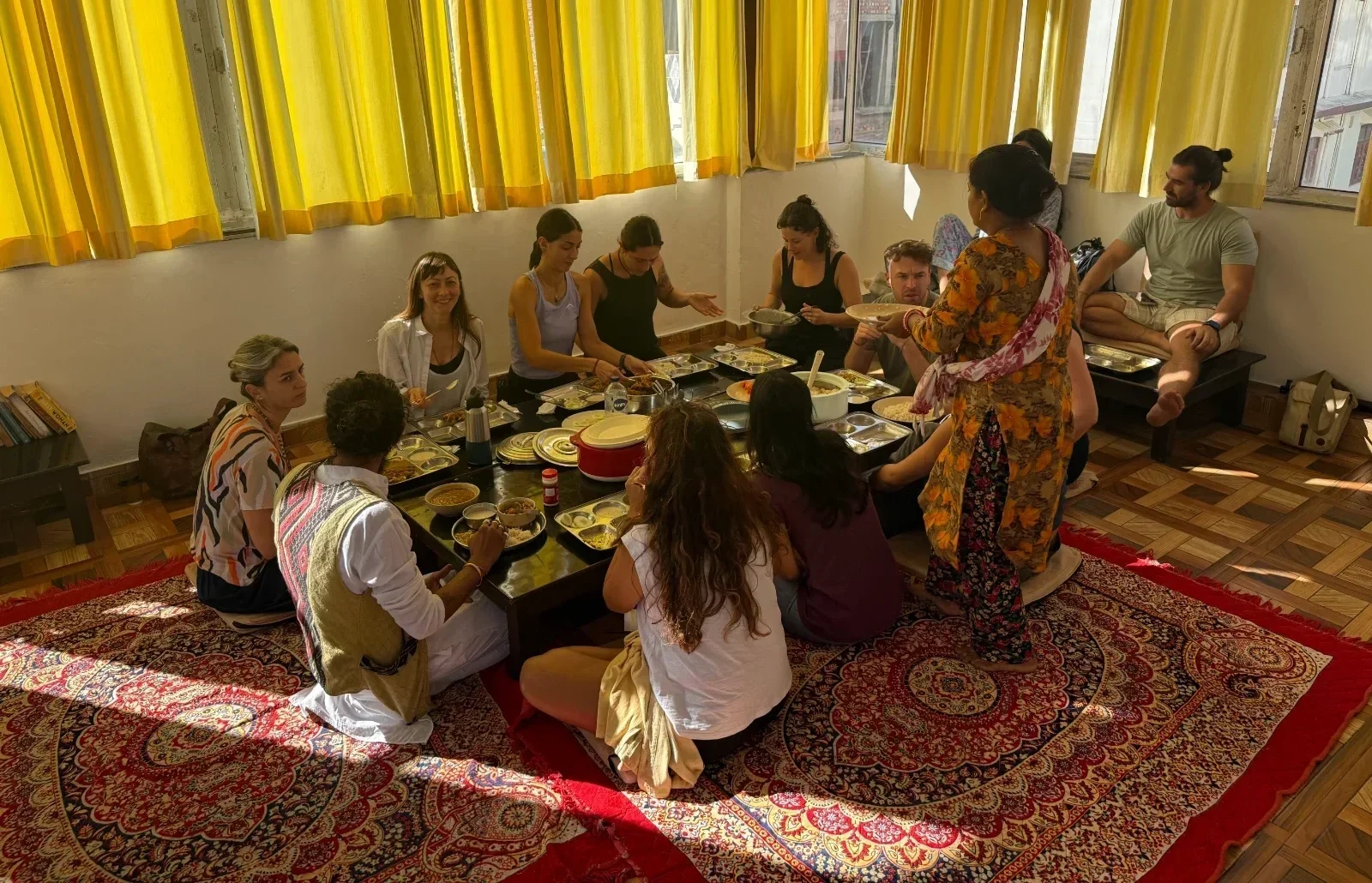
Three fresh vegetarian meals are included daily prepared according to Ayurvedic principles. Breakfast after morning practice. Lunch at 12:30 PM. Dinner at 6:30 PM.
Meals are communal. Eating together is considered part of the practice a time for conversation, reflection, and the kind of connection that only forms when people share a rhythm.
Midday Study
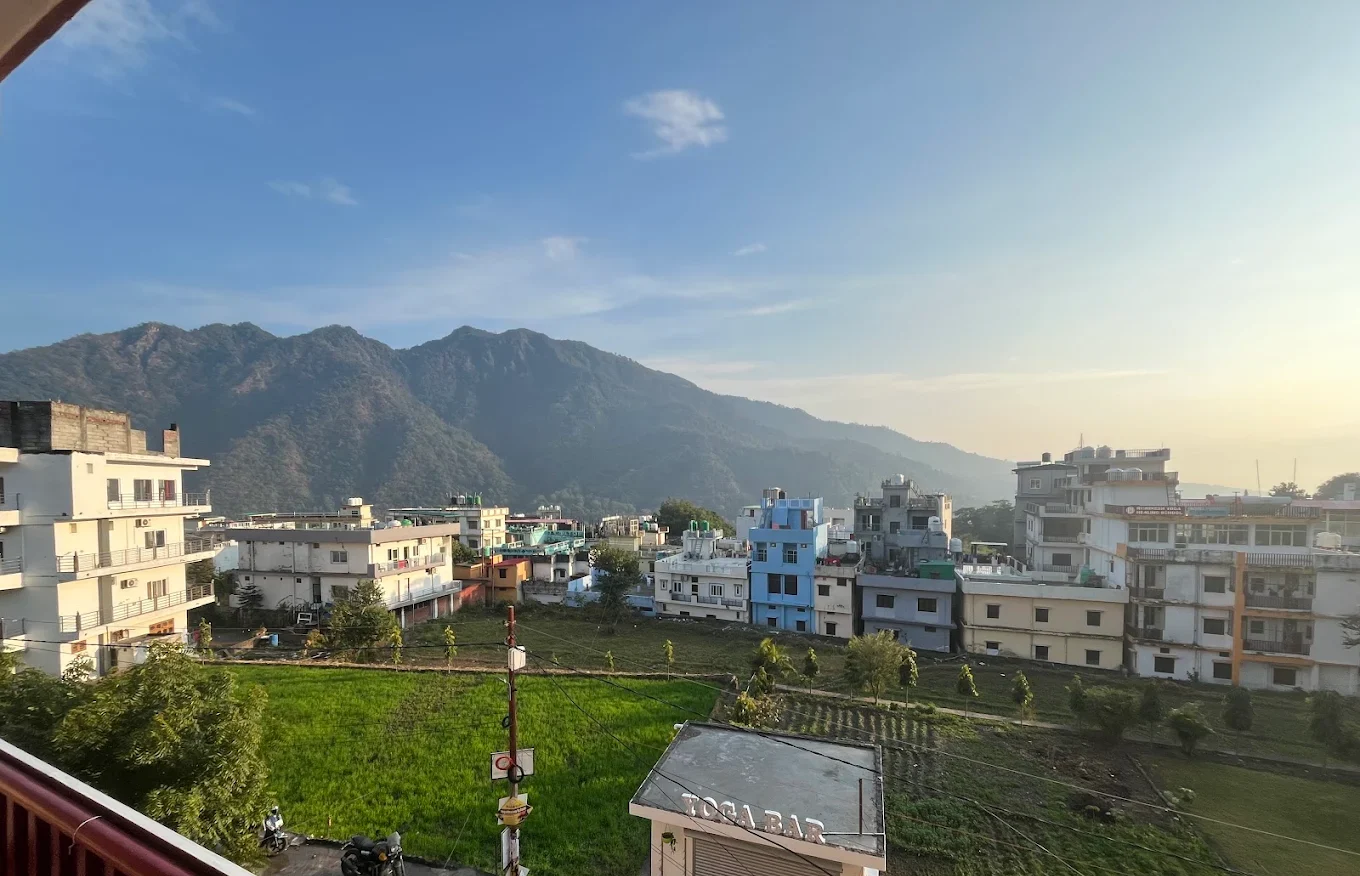
The course is fully residential. Students stay on site at Upper Tapovan (near 12 Monks) or Lower Tapovan (near BeMonks), Rishikesh. Shared and private room options are available.
Living on site is not incidental. It is how the Gurukul rhythm works. Proximity to teachers and fellow students is how depth accumulates not just in the practice hall but in the hours between.
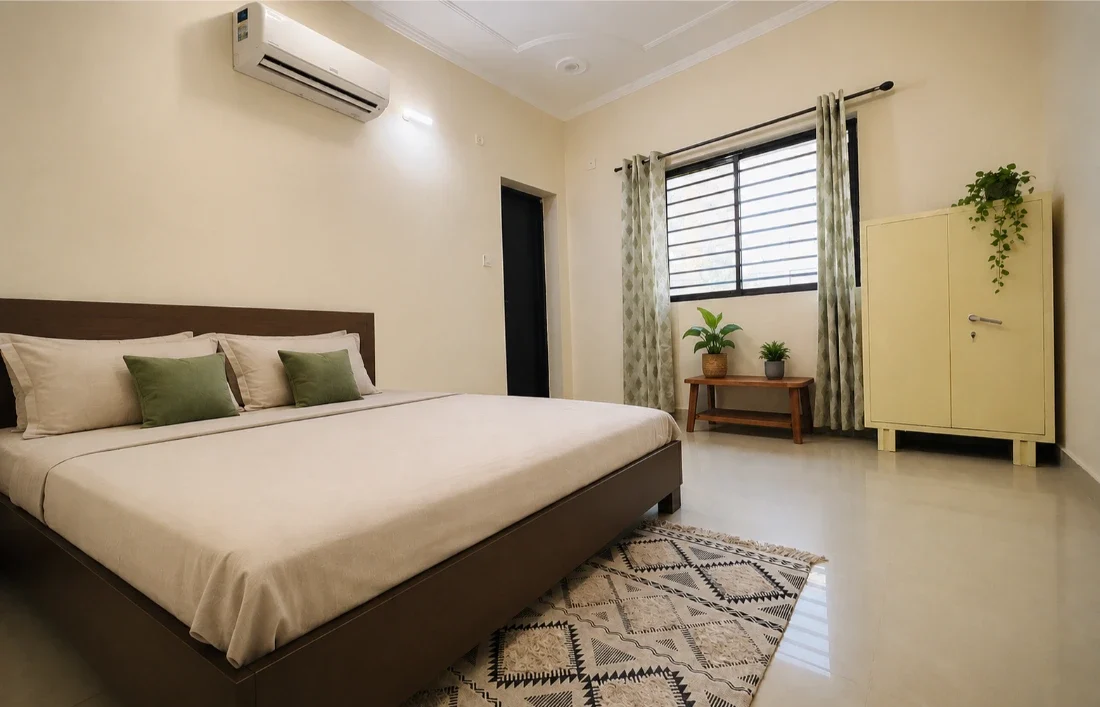
$849
$699
/Per Person
- Full 100-hour training
- Accommodation
- Satvik Breakfast, Lunch, High Tea & Dinner
- Course materials
- Guided excursion
- Alumni support
$999
$799
/Per Person
- Full 100-hour training
- Accommodation
- Satvik Breakfast, Lunch, High Tea & Dinner
- Course materials
- Guided excursion
- Alumni support