
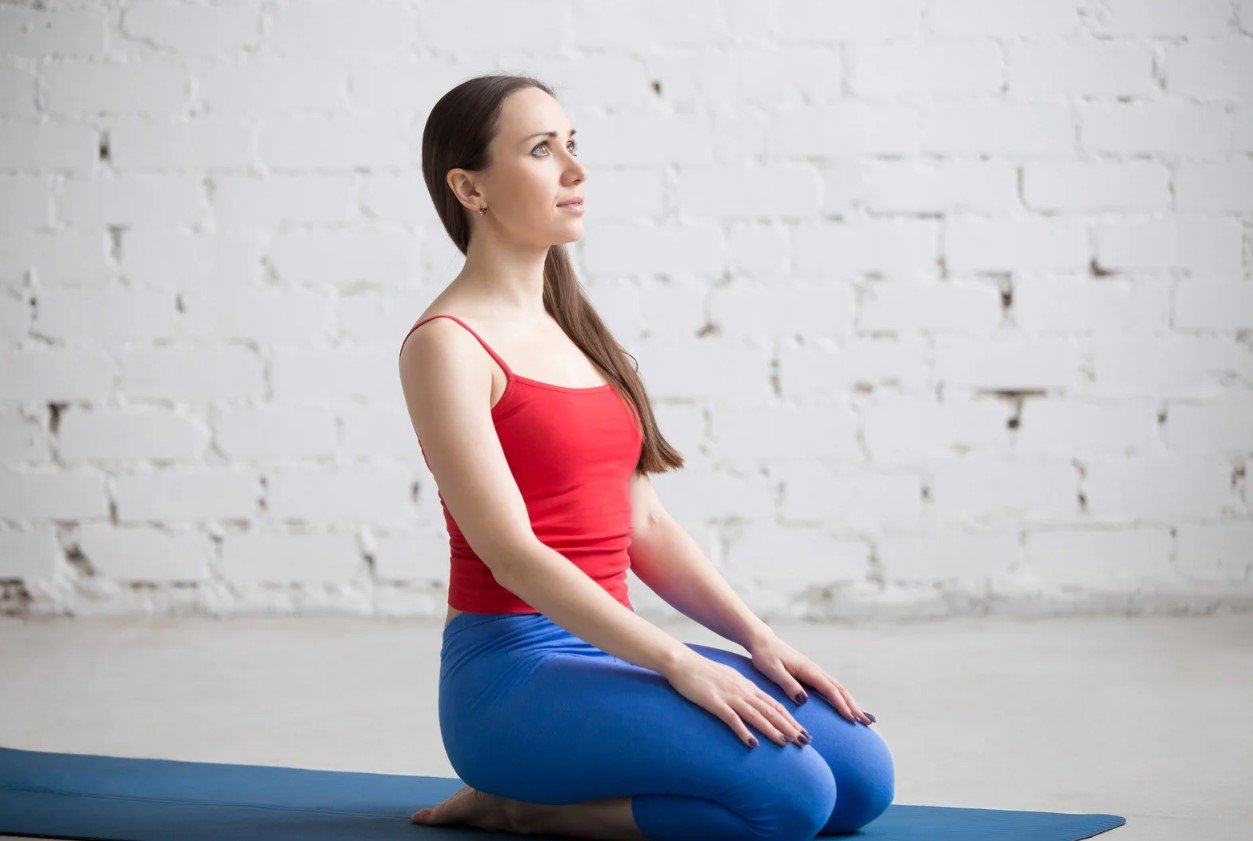
Discover Vajrasana — the thunderbolt pose. Support digestion, calm the mind, and awaken deeper stillness through this simple practice.
The First Time I Tried Vajrasana
I’ll be honest — the first time I sat in Vajrasana, I didn’t feel “spiritual.” I felt my ankles ache, my knees complain, and my mind wonder, how long do I have to stay here?
It wasn’t until years later, after a meal in an ashram kitchen, that I finally understood its quiet power. We were asked to sit in Vajrasana for ten minutes after eating. At first, I resisted… but then something shifted. My heavy stomach softened, my breath slowed, and an almost meditative stillness arrived. That night, I slept better than I had in weeks.
Since then, Vajrasana — simple as it looks — has become one of my most reliable companions.
What Is Vajrasana, Really?
“Vajra” translates as thunderbolt or diamond. It’s not just a pretty name. Think about it: the diamond is unbreakable, the thunderbolt strikes with clarity. When you kneel into Vajrasana, there’s an echo of that energy — grounded yet piercingly clear.
Unlike most yoga poses, Vajrasana is unique in one way: it’s traditionally recommended after meals. Ayurveda describes it as a seat that directs energy downward, supporting digestion instead of disrupting it. Some Hatha yoga texts even list it as a posture for meditation, right alongside lotus.
check out 200 hour yoga teacher training in rishikesh
Why This Pose Matters
I’ve dug into research and spoken to teachers, and the benefits fall into a few categories. But instead of listing them clinically, let me share how they’ve landed in my body — and in the lives of other women I practice with.
Digestion that actually works. Sitting in Vajrasana after eating feels like giving your belly a soft hug. Gas and bloating often settle. A 2024 survey of practitioners even showed fewer complaints of constipation when done daily.
A spine that remembers its dignity. The pose gently lengthens the back without forcing. For those of us hunched over laptops, this can be a lifesaver.
Grounding when life is spinning. There are days I can’t sit cross-legged without fidgeting. Vajrasana steadies me. Within minutes, my breath drops lower, calmer.
Ankles and thighs that quietly grow strong. It doesn’t look like “exercise,” yet over time, those little muscles adapt.
How to Do It (Without Torturing Yourself)
Kneel on a mat or folded blanket.
Bring your knees together (or hip-width apart if that’s easier).
Let your big toes touch, heels slightly apart.
Sit back slowly so your sit bones rest on your heels.
Keep your spine long but not stiff. Shoulders soften. Hands rest on thighs.
That’s it. Simple, not always easy.
Tips I wish I’d known sooner:
If your knees protest, slide a block or cushion between your heels and sits bones. Total game changer.
For ankle pain, tuck a rolled blanket under them.
Start with 2 minutes. Add time slowly. Forcing never works.
The Energetic Side
Beyond muscles and digestion, Vajrasana has subtler gifts. Yogic texts describe it as balancing for the Muladhara chakra — the root. That makes sense to me. Every time I sit, there’s a “plugging in” sensation, as if my body is reminding me: you belong here, on this earth, right now.
And digestion isn’t just about food. How many of us rush through the day, “consuming” conversations, emails, experiences — never pausing to digest them? Vajrasana can be that pause. A way of letting life settle.
Common Struggles (and Gentle Fixes)
Pins and needles in the feet? Totally normal at first. Shift gently, or shorten the time. Circulation improves with practice.
Lower back rounding? Imagine your chest being lightly lifted by a string. Sometimes placing a cushion under the sits bones helps keep the spine tall.
Impatience. Yes, your mind will wander. That’s part of it. Stay anyway. Even 3 minutes counts.
FAQs
Q1: Can I really do it right after a heavy meal?
Yes — though if you’re stuffed to the brim, wait a few minutes. Start with short holds and see how your body responds.
Q2: Is Vajrasana safe for everyone?
Mostly yes, but if you have serious knee, ankle, or spine injuries, check with a teacher or physiotherapist first.
Q3: How long until I feel benefits?
Some people notice relief within a week. For deeper shifts — better posture, calmer mind, digestive rhythm — give it a few months of regular practice.
Bringing Vajrasana Into Daily Life
Think of it less as “exercise” and more as a ritual:
After meals: a quiet pause, even if just 5 minutes.
Before meditation: helps anchor the mind.
During stressful days: a grounding reset.
I sometimes light a candle, sit in Vajrasana, and simply breathe. No agenda. No timer. And often, those moments leave me more nourished than the yoga flows that look impressive on Instagram.
Vajrasana doesn’t shout. It doesn’t dazzle. It whispers. And if you stay long enough, you might hear what it’s been whispering all along: that steadiness is a practice, that digestion is sacred, that even in stillness, transformation happens.
learn to know more about vajrasana, you can visit best yoga school in rishikesh and join 300 hour yoga teacher training in rishikesh